MENDEL is a tech-enabled analytical software suite for memes
Idea
Analysis and synthesis are two essential and complementary components of any technology. This is true for genetic technologies and also for their cultural counterparts. On the analytical side, and among other things, biology uses methods to classify organisms, reconstruct evolutionary descent, track and trace (epidemics), sequence genomes. It is anticipated that a cultural technology enabled through memetics might find similar tools and techniques also useful. Modern biological analysis frequently relies on digital information processing and sophisticated software. MENDEL then, offers a cultural analyser, based on memetics, that uses computational techniques, derived and adapted for the analysis of culture.
A further complementary software development is intended. While MENDEL is an analyser, EDEN-ML will be a cultural synthesiser intended to facilitate the operations of RME (recombinant memetic engineering), which is analogous to genetic modification methods. This will generate new memes and simulate their performance in silico.
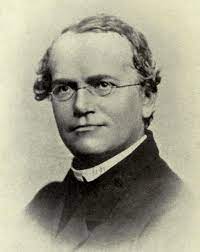
MENDEL is an acronym for Meme Enabled Numerical Derivation Evolutionary Lineages (or something like that) that honours the name of Father Gregor Mendel, famed for discovering the factors that influence the inheritance of phenetic traits in Pisum sativum and is known as Mendelian inheritance. Darwin and Johannsen had suggested a mechanism of inheritance, but the discovery of the structure of DNA by Crick and Watson, along with Mendel, became the Modern Synthesis that consolidated Darwinism and the role of genes in evolution. Dawkins progressed the parallel of the dynamics of genetics to suggest a mechanism for cultural evolution: the meme.
Because genes are encoded information, they lend themselves to computerised analysis and much work has been done on the computerisation of biological models. Dawkins provided a theoretical crossing of the Hiekalian bridge between evolutionary biology and cultural evolution. MENDEL, as a software platform, is a similar crossing. It adapts computerised biological models whereby the dynamics of genes are translated into their cultural counterparts of memes.
As software, MENDEL offers automated cluster analysis (ie phenetics or numerical taxonomy), cladistics (ie phylogenetic systematics), and the implementation of graph theory (drawn from discrete mathematics). These reconstruct hereditary pathways of cultural items and provide an epidemiological model of their social dispersal.
Application and Uses
Graph imaging
The most basic function of this software is the graphical depiction of data as defined in graph theory by G = (N, E). That is any set of relators and their relationships, nodes and edges, represented by “circles and arrows”. The actual visual objects, as seen on the screen, the pixel image, shape, size and colouring, are selected by the node or edge type. Above that, it allows for a large functional library of mathematical operations as defined upon graphs. By way of extension, graph depiction has been made dynamic through the inclusion of a micro-physics engine: Gt is a function of time, meaning that the circles and arrows can be animated to represent changes in relationships, such as weighting. Imaging is also interactive and accessible through VR interfaces.
Cluster analysis
A common feature of data mining is cluster analysis whereby groupings of items are defined by their traits such as similarity. Visual plottings of items would reflect the similarity of those items such that similar items appear in close proximity to each other on the display. The dynamic facility allows for the observation of movement and change of proximity as factors that affect similarity change over time. Cluster analysis has general application to any set of taxa, but for cliology, provides insight into the groupings of cultural artefacts, population demographics (demes), and memes. The potential effects of tweaking traits can be viewed.
Phenetic reconstruction
Phenetics (also known as numerical taxonomy) is a form of cluster analysis that portrays the results as a dendrogram: a tree called a phenogram. The similarity of the taxa is reflected in the distribution of branches. Phenetic reconstruction allows for the additional, but not necessary, inference that such a distribution, ie similarity between taxa, may have arisen through inheritance: descent with modification.
Cladistic analysis
Cladistics (also known as systematic phylogenetics, or evolutionary trees) claims similarity to be a function of inheritance. The visualisation of taxa and their relationships, as a cladogram, is the extension of a phenogram but makes the evolutionary patterns explicit. Cladistic analysis can also be used to identify the introduction of novel traits as well as tracking the preservation of traits down the historical timeline of descent. Cliology would interpret a cultural cladogram (eg of memes, demes and artefacts) as being the pattern of their evolutionary development. The story of transportation could be told as the diverging technologies stemming from the invention of the wheel. While cladistics may not tell us what happened historically, it does tell us when innovation occurred. Knowledge of this event, in conjunction with other data, allows for the construction of evolutionary scenarios, often daubed “just-so stories” among biologists, because they are unfalsifiable narratives about how some anatomical or behavioural change came about. Because cultural development is relatively short, its evolutionary scenarios may well be supported by the iteration of surveying historical documentation.
A feature of the software will be to compare dendrograms. A dendrogram for a set of memes might be set against a dendrogram for a set of demes to, say, understand how a population range would adopt new ideas. In marketing, this would be an indication of segmentation: what product ranges would address the needs of different customers.
Social network and flow analysis
A meme might match with some deme, that is, a new product might appeal to a sub-set of customers within a population. As individuals, and groups, interact according to their social network topology, then a novel meme is likely to flow in some relationship to the contacts. A picture of the topology, who connects with whom, and what they are interested in, could be used to anticipate how a meme is likely to flow through the network, where the blockages sit, and who the superspreaders and influencer are. This image would be valuable to word-of-mouth, or viral marketing campaigns.
Forecasting and intervention
While EDEN-ML would provide a markup language for simulating memes and will be integrated with MENDEL, MENDEL does provide interactive features whereby novel scenarios can be experimented with. Different traits, populations, and sightings can be applied to the data, the effect of which would be rendered visually. This tweaking has practical cliological applications of forecasting and intervention by exposing cultural eka-space, what novel memes might exist there, how they might be adopted by a human population, and what evolutionary pathways need to be followed to access and disseminate them. In the marketing example, tweaks to a particular product might open the market to a wider customer base and indicate how to communicate with those prospects.
Users and benefits
MENDEL is the equivalent of genetic analysis but for memes. It is intended to assess what memes are present or absent in some cultural item, such as an artefact, action or idea. It is also intended to make comparisons between groups of objects. In this way, various taxonomies can be constructed. With these taxonomies, we can envisage how such objects it depicts behave, how they spread through culture and what benefit they might confer. MENDEL, in a retrospective mode, can assess how things got the way they are, that is, the evolutionary pathways that decided the present state of culture and its component items: it allows for historical and up to contemporary mapping of culture across social and geographical dimension, both statically and dynamically.
MENDEL also has a forecasting mode. By understanding the current state of culture and its trajectory, we can have a good guess at where it is heading. Again, these can be visualised along a time-line thereby allowing us to know when some cultural item is likely to be introduced, when it will go mainstream, and when it will reach the end of its lifecycle.
Most ambitiously, MENDEL offers an intervention mode. By being able to forecast the effect of events and simulating futures, then we can determine if those envisaged futures are desirable, and with better knowledge of the potential effects from a range of options, we can select actions that are most likely to result in the outcomes we desire. It allows us to steer the direction of culture.
As MENDEL offers a map of culture, then we can identify where there are gaps-in-the-map. These correspond to eka-memes, technologies, routines, policies, ideas, that could have arisen, but through happenstance, became cultural evolutionary stumps. MENDEL reveals wide themes that might be worth revisiting. It should then present a technological-road-map by which we can access and exploit these gaps, and forecast the impact of innovation.
Understanding, anticipating and acting on our predictions is and has always been a concern for all individuals, albeit at a local level. MENDEL is a software suite that systemises this very human need for foresight. However, the target for forecasting and intervention is that of a wider cultural scope at a population level. MENDEL is therefore suited to those who have an interest in mass persuasion with the intent of affecting the shape of culture. The list is long, but can be partitioned into public organisations (public officials, health authorities, lobbyists, activists groups, political organisations) and commercial outfits (marketing, advertising, promotion, public relations, sales). MENDEL also can be applied within the organisation as well as externally.
Implementation
MENDEL is underpinned by graph theory which is based on G=(N, E). This mathematical foundation allows for all kinds of graph theoretical operations to be performed.
An intuitive graphical user interface is desirable, this not only allows for user interaction with what would otherwise be very abstract data but allows for an intuitive understanding of the results in the form of visual images, such as animated flows of information among a network diagram. Virtual reality interaction is considered.
The application is being coded in Microsoft Visual Studio using VB.NET and uses packages such as WPF, XAML etc.