Cliology

Blog

  • Summoning the muse

    Summoning the muse

    There is method in this madness, and madness in the method. Producing musical earworms is actually about teasing out and documenting the creative process. Of course it is about the music, but moreover, having a systematic development process for creating designer memes is the basis for Recombinant Memetic Engineering, a more generalised methodology for assembling memes for any purpose.

    I’m trying to get the process down as quickly as it is revealed to me, and that is not necessarily occurring in sequence order. Putting it together in a sensible way can wait until later. Here, I want to give some insight into my experience at the beginning of the songwriting process.

    Dawn is the friend of the muses, as the Latin proverb goes. I often dream about really amazing songs and not necessarily anything I would come up within a waking state. I dreamed up an entire blues soundtrack to a road movie once. If I realise I am dreaming then I think to myself, I’ll try to remember this, but when I do wake up, it’s gone leaving some vague recollection of a good tune lost. I have no idea why all this is; perhaps the muses are playing my strings. Sometimes though, a tune does persist through the hypnogogic state and lasts with me for some time. Clearly, I’m a dreamer, but I’m not the only one.

    I used to write the words down if I could find a working pen. I would even attempt musical notation in that blurry state. I did even try to use the memo feature on my phone. The evolutionary approach has changed all that. It has put additional selection pressure on those musical memes emerging from the dream world. I am after the most sticky and spreadable hooks. If a ditty hangs with me all day, then it becomes a candidate for further musing. This approach tends to weed out the less catchy contenders while retaining the fittest, those that make the grade.

    Of course, this is just one source of inspiration (in its original sense). With such an earworm that hangs around all day and won’t go away, then I feel moved to progress onto the next stage of production. The muses may bestow their gifts without requiring any effort on my part, but turning that idea into a product is where the blood, sweat and tears are shed.



  • Experimental Mainstream

    Experimental Mainstream

    The hook-line is one is that which tends to stick in the mind – almost to the point of annoyance in some cases. Popular music, especially that with heavy radio rotation, tends to emphasise a strong hook-line, along with other features such as structure and length. It is a truism that applies to song-writing and production, that the effort is 10% inspiration and 90% perspiration; perhaps its another instance of the Pareto principle. But it begs the questions, and one that is asked by those aspiring to make a smash hit, what makes for a killer hook? What is the formula for chart success?

    Since adolescence, I’ve spent a significant portion of my time listening, analysing, deconstructing, decomposing, and now disassembling popular tunes so as to give me a clue how to write and produce my own material. That contemporary popular musical genres are memetic phenomena is fairly obvious to me for quite some time, as is the population ecology susceptible to a particular earworm. But the principles of cliology and memetic engineering, in their deliberate and systematic attempt to design novel and hyper-virulent cultural items, adds a new twist to the effort of making music. What was once purely the minstrel’s craft, becomes augmented by science. Not only is the production given to music technology, but also the very creative process of penning the words and music.

    I’ve shifted position from the self-indulgence of expressing my angst, towards a more commercial objective. Selling-out? Maybe, but this is a pretext to apply cliology and memetics in a way that exploits a rigorous appreciation of what cultural traits go together to make for the perfect pop. Its a quest for the philosopher’s stone, an alchemic formula that summons the muse. Its a clinical trial in the laboratory of culture – a pursuit that I call experimental mainstream. The call is to apply Campbell’s ideas, variation and selective retention in a very directed way. A memetic algorithm that not only generates a hook, but rather a dragnet of barbed-wire.

    The notion is proving to be quite promising so far; no matter whether the productions are “good” or not, they are sticky. This methodology itself is evolving. Often there comes a realisation, framed in memetic terms, of something that I have been doing for years. But with that anchored understanding of my own workings, I can now apply the method systematically and with intention. I appear to be becoming more adept at doing so, and dream of an endless string of chart-topping success. But the underlying principle of Experimental Mainstream is in the understanding and application of the more general principles of cliology. Can those algorithms for musical inspiration be cast upon culture in a wide sense? This understanding comes in waves, hence this blog category, but it will serve to remind this studio rat why I’m sat for hours with my DAW trying to get that perfect snare variation.

  • Darwin in your ears

    Darwin in your ears

    Cultural evolution would suggest that music preferences and popularity would change according to selectionist processes. I believe it has done, but that is a question for the academics. I self identify as an engineer whereby the methodology is to shoot first and ask questions later. The question that I will ask at some point is ‘can music be produced along evolutionary lines?’ or maybe ‘what production techniques does Darwin give us?’

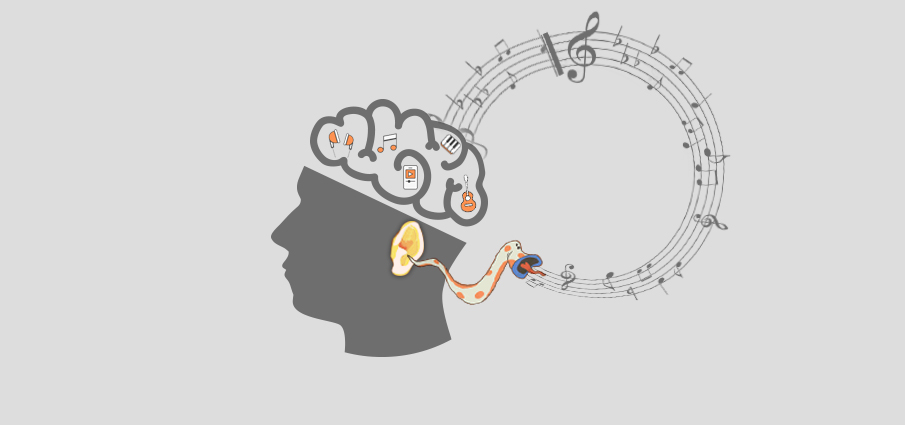
    Calliope, as the muse of chunz, one of Clio’s sisters another god in the cultural pantheon. As a cultural object, a clion, then a piece of music composition makes for a good test case in playing around with cliotechnology. Can the principles of cliosynthesis be applied to assembling a “better” cliome (expressed as an mp3? The term “ better” is scared out as the issue of cui bono arises in this subjective arena.

    I’m an avid synth and computer geek, obviously I’m a big Depeche Mode fan along with enjoying more “experimental” stuff. I’ve always been fascinated by contemporary popular music. Well, post-punk electronica anyway. I still listen to BBC Radio 1. I’ve been involved with the music industry since the early days of MIDI in various lugging gear around and technical capacities. But it has always been one of those perennial bugs, and I’m not the only one to puzzle on this, what makes for a killer hook? What makes a music producer? What makes a record popular? What is that magical formula for pop success? If I knew, then I would be blogging about something different. However, let’s examine this conundrum from a cliological/cultural evolutionary perspective.

    I’d posit that a tunes popularity has cultural evolution, evolutionary epistemology and evolutionary psychology components; or bluntly, a catchy tune, as Dawkins says, is a meme. And thereby we return to memetic engineering and cliotechnology.

  • Du hast ein Ohrwurm!

    Du hast ein Ohrwurm!

    Right, so I set today as being my target for getting the Grand Framework blogged out. Tomorrow is the start of the Association of Contextual Behavioural Science in Dublin and that give me the incentive to focus on the behavioural modelling schema. Now I can get back to plodding along with the main pages of the site, and some miscilanious blogging. There is quite a bit to post.

    I’ve decided to introduce a new blog category which is a journal of attempts to generate factory music using memetic and cliological ideas. It goes under then name of Ohrwurm, for reasons that will become apparant.

    I’m not going to give all my secrets away, just in case one of the experimental strains escapes fromthe lab and causes some kind of zombie apocalypse. Max Martin (my hero) has his “mellodic math” well my approach has some methodological symilarities: it involves evolutionary prototyping. But in my case, the focus is on trying to engineer a meme/clion, rather than dominating the play lists. To be truthful, a revision of goals might be poingiant come to think of it.

  • Demes, demographics and daleth

    Demes, demographics and daleth

    I coined, or rather hijacked, the term deme to have a special purpose in cliology. It is almost the same as demographic in that it refers to a population, but has a few tweaks that make it more specific to cliology. https://en.wikipedia.org/wiki/Demography Demography is often used in government policy making and marketing to slice up the population and put them into boxes. It comes from the word ‘deme’ with ‘graph’ appended. The Ancient Greek term for municipality was ‘demos’ or ‘deme’ https://en.wikipedia.org/wiki/Deme From this stem, we get words like endemic, epidemic, pandemic – relating to how widespread something, like a disease, is within a population. We also get academic, which was an olive grove where Plato did his teaching. https://en.wikipedia.org/wiki/Academy

    Biology uses the term ‘deme’ to refer to the local population of a species, an example being that of polar bears at different parts of the arctic. https://en.wikipedia.org/wiki/Deme_(biology)

    I chose deme over demographic for the biological analogue, but rather than being geographic communities, the deme is defined by common ideaologies and are communities of interest or practice and so on https://en.wikipedia.org/wiki/Community_of_interest and are catagorised by the ideas they share, or beliefs to which they are adherents. Memetically, a deme is a population in which a meme is endemic – here the memes define the demes. For example the Jehovah’s Witnesses are international, but would be of the same deme as, as they would claim, they all believe the same thing.

    A deme though is a category rather than a class and the physical populations can overlap as an individual might hold separate ideas that they find compatible. For example, political and religious beliefs can, but don’t necessarily covary. Two christians may be in communion, but might object to being called comrades. Hence, at once, an individual may be of a deme religiously, a different deme politically, support a soccer team, have a mac rather than a PC and so on.

    A deme is a corpus, where individuals are corpuscles. It could be true that an individual might adhere to an ideology all their life, but the deme principle is not premised on individual members. Individuals can change their ideas and move from one deme to another, as by religious conversion: one deme would shrink, while the other would grow. Compartmental epidemeological models become useful in such an analysis https://en.wikipedia.org/wiki/Compartmental_models_in_epidemiology

    I have thought about demes in this way for a long time, but it seemed that the idea needed firming up, but no so much as to become restrictive. It seemed also, as the cliome idea was developing, that demes were more related to that framework – a cliome is tantamount to a memeplex and a deme are those who adhere to that cliome. It seemed also that a symbol would be required as the notation progressed, and as with that layer of thinking, a Phoenician character presented itself. The latin D, via the Greek delta comes from the Phoenician ‘daleth’ .

    I have tried to use symbols that are not quite as arbitrary as those in maths, but have some intrinsic structural value. The triangular shape is convenient as it has three points, like the noam (Phoenician nun), but is inverted, so something of a kludge is required. A cliome consists of re-transmissible noams, and a noam has three points: sigma – the totality of salient awareness, nu the cluster of values, and rho – the potential responses. My current thinking is that, as adherence to noams defines demes, and a noam is of three points, then a deme, denoted by the daleth triangle should also be of those three points. In other words, a deme might well be identified according to sigma (bottom-left point), nu (apex) and rho (bottom-right point). The idea is a work in progress, and it remains to be seen whether it forms part of a more coherent system, including properties like pi and tau etc.


  • Applied Cliology – talk about pop-music

    Applied Cliology – talk about pop-music

    Image result for the song machineCliology and cliotechnology are concerned with the process of culture rather than its content. They are the application of the scientific understanding of cultural evolutionary psychology and memetics rather than the kind of commentry on contemporary culture found in Sunday newspaper suppliments. While reviews of opera, ballet and modern jass have appeal to a certain section of readership, cliology is at risk of being aloof from any actual cultural phenomena. Some seperation is not necessarily a bad thing if it exposes culture as going beyond what has been normalised as “culture” in those suppliments. However, the point of cliology is that of application rather than disengaged study. It is meant to have practical engagement with creativity of the humanities and arts among other aspects of culture in the widest sense.

    The popular music industry has long been a cash cow, and like Hollywood, has frequently saught out a formulae for making smash hits and blockbusters. This is not a bad thing in itself, but has often lead to a formulaic staleness of releases, and has been a bone of contention between the artisans, who want to give the world something different, and the financially oriented executives, who want a relyably salable product with mass commercial appeal. We can see how cultural evolution is at play in pop: the variation and selective retention of musical memes. On the one hand, the artists generating slightly different, but not so much to be shocking, material for the entertainment and consumption of audiences with expectations but short attention spans. On the other hand, the selection pressure from the supply chain of interdependent industries, obviously including the music industry itself, but also those of advertising media (radio stations), advertising agencies, vendors, and product manufacturers and so on. The music producers experiment with a fresh (but not too fresh) idea, often dabbling with advancing music technology, otherwise audiences become bored. If that innovation turnes out to be successful, then it is retained, speading into the mainstream as other producers leap on the bandwagon. These innovations accumulate into new production styles, but they have a limited shelf life. We can see the familiar product life-cycle, Lotka-Volterra cycles, of popularity, investment, and uptake in genres; from risk taking early adoption, to peak of chart success, to hasbeen and yesterday. Genres follow that quick fasion cycle. Indeed, they form a phylogenetic tree encountering blooms and extinctions; some recombinations receiving temporary acclaim; most being consined to obscurity.

    Cultural evolution can shead light on the dynamics of the pop industry. It is however an industry and a hungry one at that. In the same way that social psychology informs organisational behaviour, or physics informs microchip production, or chemisty informs material manufacturing, can our evolutionary understanding of a sector that is clearly subject to evolutionary forces be used to inform it. Can cliology generate pop-music and all that entails. Although some would like to call their musical formula “scientific”, innovation remains the craft of the producers and artists and engineers. Replicable schema emerge from experience, imitation, trial, error, psychoactive compounds and sometimes luck. The applied sciences of cultural evolutionary psychology, neuroscience, behavioural economics, network theory and so on, have little to do with making the actual music we hear (although there are some adventurers playing with such.) Cliology, as a methodology of meddling with the memes of culture, is perfectly suited to scooping, recombining, simulating, and hypeing noval musical viruses inherent in the pop industry.  The quest then is to cliologically engineer the ultimate earworm epidemic, a “black hit of space” that hijacks mass neuro-anatomy, and dominates the charts. The aesthetic merits of such an effort are dubious, but that has never been the concern of pop anyway – radios do have an off button.

  • ?Category theory

    Category theory

    I have covered the ideas of dyads and some symbolism. When the dyads are combined with the remaining corner of the triangle, things become more interesting. I’m putting this here for the contentment of the math-heads. There are obviously three of these dyadic relations:

    ((σ-ρ)-ν) or (υ-ν) or (ρσ-ν)   how motive influence stimulus-response

    ((σ-ν)-ρ) or (π-ρ) or (ρ-ν/σ)   how a stimulated motive influences motion

    ((ρ-ν)-σ) or (τ-σ) or (ρ\ν-σ)   how a stimulus influences motivation

    Of these, the (π-ρ) combination is most informative to behavioural modelling. Pi is the connection between stimulus and values and can be seen as the evaluation of contentment. Where the stimulus mismatches values, then this leads to a state of discontentment, and something has to be done about it there is motivation. This motivation is a connection between motive (or values) and motion (or response). Hence, the stimulus, via values, generates a response. The distorted triangle (because stimulus-response is indirect) is completed.

    So, (π-ρ) equates to ▽)

    Let’s go through this, the cat has some things which are important to it, such as having dry fur (ν = dry fur). But, it is outside and it starts raining (σ = raining).

    ν/σ = π (contentment match of stimulus against values)

    The cat is getting wet and it doesn’t like it, and action needs to be taken.

    ∴ π  →ξ  τ  (discontentment (π) implies (ξ) motivation (τ))

    ν/σξ ρ\ν   to put it alternatively.

    So, by joining the sides where ρ\νν/σ = ρν∀)σ

    ρν∀)σ  which links up stimulus to response and allows us, via omicron to get upsilon: ξ  →ο  υ

    ∴▽)

    The takeaway here is that given two sides of the triangle, we can work the third out: a kind of Pythagoras’ of behavioural calculus I suppose. It does relate to some abstract mathematical concept called category theory, but I won’t go into that. OK, I hold my hands up; the whole thing is nothing other than a pseudo-mathematical proof. Actually, I would claim proto-mathematical, but whatever. Solid math can come later. Right now, I’m after a way of describing and understanding such relationships: one which goes beyond stimulus-response to involve values in an intuitive graphical manner. The reasoning will become apparent on exploring the practical applications such as the persuasion of memetics and cliology.


  • ?Triangles

    Triangles

    So now we have 3 points on our triangular shaped noam: (σ) sigma (ρ) rho and nu (ν), corresponding to stimulus, response, and values.

    ρνV)σ

    I admit, this is something of a rehash of a general systems model and I will incorporate feedback and so on later. Simply replacing labels does not add anything,  so what is the point? Well, it is meant as a model for a specific engineering purpose. A map, or model, is useful where it highlights salient features but suppresses the superfluous, otherwise, they can be bewildering. The aim of this model is to provide an intuitive visual calculus for rapid apprehension and manipulation of memes. It takes the perceptual position of looking at another person and their memes. The reading direction in the west is left to right which reflects the way we think of time and order. Consequently, watching someone else read it would seem, from our view, they go right to left. The sigma rho positioning on the triangle emphasises that we are viewing someone else’s memes and not our own; a stylistic point raised previously.

    Rather than providing exacting definitions, the noam model confers some flexibility. Other interpretations are available. With a bit of fudging it becomes possible to superpose “means, motive, and opportunity” of “ready, willing, and able” as these convey the spirit of a noam perhaps more than even the systems model does.

    I’ve noted previously that it is useful to break down the points to arrive at a deeper understanding. Kipling had six honest serving men; well the idea goes back to Rome, where they listed seven. These are re-mapped onto the noam points using my terms.

    • 3W: Where, when, who (with) as sigma which signals location, time, and social context as triggers for meme activation.
    • V: Why as nu is about the reason for action, it is the underlying value or purpose, as indicated within the meme/noam that a behaviour serves.
    • 3M: Mission, method, means as rho provide what to do (behaviour to engage in), how to do it, and what resources would be required to effect action.

    Illustrated, this gives us a 3M-V-3W structure which is another contrivance, but is at least memorable.

    3MνV)3W

    With these principles laid down, I can now begin to discuss the lines between the points, conjoint noams, containers, and other components and constructs, to build both a taxonomy and engineering model of memes.

  • April Fool’s Day

    Image result for tarot, the foolThe first of April is traditionally known for pranks and hoaxes. This is a great day for collectors and curators of spoof news that sucker us in.

    Most of these made-up stories are harmless fun, thought up for the day. Some are broadcast, such as the Spigetti tree joke, or found on the internet, but most are told person-to-person. Some are rehashed year after year.

    Is there a structure to this that memetics can learn from? Well, on the face of it, it is a chance to laugh at our own (and others) gullability and creativity. There is a mash up of deliberatly improper reasoning to such hoaxes. In Toulmin’s framework, there is some element of fact along with something fictional whereby together they result in some plausable conclusion. That is, where the fictional component is not known to have been creativly introduced into the argument, then it misleads the claim to be believed. Secondly, the claim would be remarkable in a “man bites dog” kind of way.

    For the joker, part of the fun lies in finding a fictional yet possible grounds or warrant that leads to a remarkable yet plausable conclusion, then relating the tale to someone who is unlikely to descern the fake element, thereby believing the story. When the truth emerges, usually when the joker comes clean, and the hoax is revealed as patent nonsense, then we can laugh at our foolish lack of scrutiny.

    Perhaps so, and April the first you would expect such nonsense. The real takeaway for memetics is that of the ease of construction of erronious conclusions, even if not intended as a joke, and that remarkable plausability having greater fitness than that of a more mundane truth given the effort of fact checking.

  • **ElementTemplate

    Drilldown: //Grand Framework 0.1.0/Cliome/Meme/Noam/


    Framework Navigation

    Top Up: Meme Noam Down: Fabula


    Details

    Attribute Value Notes
    Class NoamFramework
    Name
    Type Property
    Symbol
    Namespace GrandFramework_0_1_0.Cliome.Meme..
    Version 0.1.0
    Description
    The imput stimulus into the system, either external from the environment, or internal to the person or organisation.
    Example
    Navigation Drilldown: //Grand Framework 0.1.0/Cliome/Meme/Noam/


    Properties


    Name Symbol Description Example Navigation
    When
    Where
    Whom


    Specific Classes

    In brief

    Details

    Relation of other framework elements

    Symbol system


    V1 V2 Value Explanation Example
    F F
    F T
    T F
    T T


    Application

    Examples

    Related Issues

    Versioning and change-log

    Origin and history

    Current version

    NoamFramework 0.1.0