As a truly tenuous example of nominative determinism, and an idle play on words, I burped out the idea of Gray areas. Reflected binary code, or Gray code (after the electronics engineer, Frank Gray) is applied as a method of digital error correction. It resembles a binary string of 0s and 1s, but consecutive strings have a hamming distance of 1 (hamming distance is the metric I adopted in comparing cliomes).
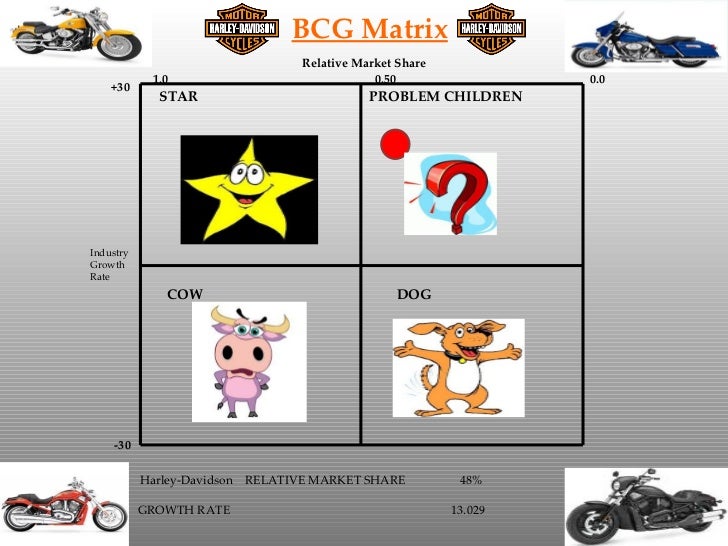
Two by two matrices are common in analysis and endemic to management consultants: the Boston matrix is famed amongst marketeers. Such devices feature 2 axes with values such as high-low, or present-absent, and graphically depict the relationship, or classification, of a pair of parameters such as market share and market growth as four quadrants. In essence it is a grid of boolean X boolean. Consultants will layout their powerpoint however most persuasive and endow the quadrants with snappy titles; mathematicians would simply call the quadrants ABCD, either clockwise or anticlockwise. Pedantic computer scientist like to see things in their binary order, and the axes labelled in a particular format. A small thing, but it could start wars and cause software to crash. The idea of the Gray area resolves this triviality.
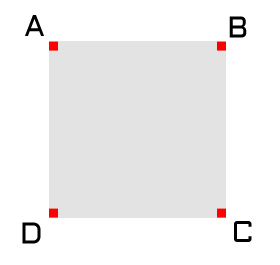
A “Gray area” then is a sequential enumeration of the quadrants according to the binary values of the axes. Numbering them 0 to 3 has a practical convenience. There is a single difference between two horizontal (or vertical) boxes, but for either of the diagonals, there are two differences. Using the Gray area numbering schema. By an astounding feat of mathematical wizardry, we can calculate the differences between quadrants using the hamming distance on their binary representations. So the difference between quadrant A (Gray area 0) and quadrant D (Gray area 3) would be a hamming distance of 2 as their binary strings are (00) and (11) respectively. This may seem like a small thing, but consider that a cliome is a boolean hypercube, then the enumeration is that of the hyper-corners. The Gray area then indicates the corner a cliome sits in, and the distance between hyper-corners, ie the distance between cliomes, is provided by the hamming distance between their numerical designations. We might also consider the number as a colour coding (greyscale) between 0, which computers represent as black and, for 8 bit, 255 – hence Gray areas would be grey areas.
How mathematicians lable corners
1
10
11
0
00
01
0
1
In application, it is likely that cultural evolution arises through step changes as cladogenesis. In other words, change occurs on a small number of traits and so the novel form is likely to be similar to its ancestor. At a cliomic level, that of the underlying memetic code, then the variant is likely to be close to the predecessor. The smallest distance between any two cliomes is of a hamming distance of 1: the change of a single trait. For culture to drift in this way, then there would be a series of changes of single traits which would indeed constitute a Gray code sequence,and can be depicted as a Hass diagram. Closeness has implications for changing cultural practice as, between the present, possibly maladaptive cultue, and the utopian ideal, may require knowing the stepping stones.
Incidentally, the Levenshtein distance between “Grey” and “Gray” is 2.
This is an introduction to the elements involved in the Toulmin framework. These are built up into higher parts of the Grand Framework. The concept can get rather involved and only the barest of treatments is afforded here.
Example taken from Wikipedia
Examples are drawn from law, science and sales. There are two dimensions here: one of particulars or rules, and another of known (or acceptrd) or to be determined truth value.
Symbolically, and in accordance with set theory, have designated lower case to be elements, and upper case to be sets. Hence G would be a set of grounds, while g would be a particular grounds. This allows for manipulation of argumentation using such mathematical tools as propositional and predicate calculus, and can be programmed for automation using high level computing languages.
Claim
The proposition that is being claimed and which the truth value is not known without further argument. it is a claim to the case instance.
In law: A big chunk of legal action is taken up by contracts and compensation. A fine example of a legal claim might be, in the case of a non-fault accident, an insurance claim. A criminal case would have two contesting claims of innocence and guilt.
In science: Scientific claims tend to be a little muted and modest. Rather than explicitly boasting to prove somthing conclusivly, a claim in science tends to be that of “lending support” for some theory. A claim might be climate change is occuring.
In sales: The sales guy is trying to persuade you to part with your hard earned cash; that’s how they survive. The stereotype used car salesman would tell any porkies to push a heap of rust onto a hapless punter. They could claim amazing things that are just untrue as the buyer finds out later to their sorrow. One carefull owner, when the wreck was a write off. This claim is something that the prospect values. example, this model of lawnmower cuts grass faster.
Of couse, the best sales people are truthfull as true claims reduce buyers remorse, improve repeat custom and customer lifetime value, and incite word-of- mouth evangelism, the Holy Grayle of all marketeers.
Grounds
Also known as facts or data, are the given basis for the argument. These are accepted as true, and undesputed. If a proposition is stated as a grounds, but disputed, then it would not actually be a grounds, but a claim. The grounds are the material facts of the case as presented as evidence. They are the antecedents of the propositional logic relationship of material implication.They are particular, rather than general and pertain to the situation.
In law: The material facts of the case; the admitted evidence. An accident claim may have witnesses testamonies and photographs of the accident scene.
In science: The measured data. Pehaps measurements of receiding ice caps over the last 50 years.
In sales: this model of lawnmower has a longer blade. Such a fact is demonstrable as it can be checked either against the specification or by use of a tape-measure, against other lawnmowers.
Warrant
The warrant of an argument links the grounds to the claim. It bridges the accepted evidence to the proposed consequent thereby allowing the truth value of the claim to be evaluated. A warrant is a rule, a relationship of material implication between the antecedent and the consequent. It is similar to a claim as a warrant, in itself is being claimed, and its truth value is unknown. It is different to a claim as it is not particular to the case, but rather a more general rule that connects the class of grounds to the class of claim, and therefore, by instanciation, the grounds to the claim. Note that it is possible present an argument with a false (or at least unaccepted) warrant, even if the grounds are accepted. In such an event then the claim islikely to be rejected.
In law: The claimant will want to link the photographs to the compensation amount; but the insurance company might argue that the damage was pre-existing condition.
In science: The melting of the ice caps are due to global warming. Climate change skeptics could accept that the ice has shrunk, but deny that it is a result of climate change.
In sales: Longer blades make for faster grass cutting. So, if this model of lawnmower has a longer blade, and longer blades make for faster grass cutting, then this model of lawnmower cuts grass faster.
Backing
The truth of the connecting rule, the warrant is unknown, it is a claim to a rule. Much like an argument for a claim of a case instance requires some accepted grounds for the case, then the warrant requires a grounds for the rule, which in the Toulmin model, is called a backing. Similar to the grounds, the backing is demonstrable and not disputed (otherwise it would be a warrant). In difference to the grounds, it is a rule and not a case instance. It is the rule upon which the truth of the warranting rule can be established.
In law: a backing could be a statute, something that a barrister could cite, something that is established and available for all parties to check up on, like the Misuse of Drugs Act (1971) section 2. This backing would then justify the warrant.
In science: backing may be of the form of a peer group reviwed paper in a prestige journal describing a double-blind experiment which confirms a scientific hypothesis.
In sales: an independent report such as an article in Which, might have an article on lawnmower blades and state that longer blades cut grass the fastest.
Notably, the lines between what constitutes a backing and a warrant may be fuzzy. This is critical for scientists and lawyers and sceptisism and defence are an iterative process. In debate, backing is defined by its acceptance by the parties. Where scientists or lawyers quarral about the rule base, then really they are proposing different warrants and there is no common backing yet agreed.
Qualifyer
A qualifier suggests the certainty of a claim. The Toulmin model thus far has taken backing, warrant, and grounds to establish the truth value of a claim with absolute certainty. However, it maybe the case that the arguer is other than absolutly certain. This degree of certainty has a spectrum from highly dubious, to pretty much 100% convinced, but not quite. A qualifier uses words to modify the claim such as “very likely”, “ highly probable”, “could well be” and so on.
In law: burden and standards of proof, balance of probailities to beyond reasonable doubt.
In Science: An absolute claim to knowlege is a red rag to academics; such hubristic statements will be torn down. Rather the language is less arrogant in its self assurance, while remaining confident and correct. Rather than exclaiming “I am right!”, the literature would say “patterns consistant with”, or “suggests a possible correlation”.Those in experimental or quasi- experimental fieldsmight even be able to put numers to this. but the point is to admit that we are fallable and could well be wrong.
In sales: Advertising standards are set to protect viewers from deceptive practices and false claims. Advertisers skirt around this by use of qualifiers to tone down the claim and make it publishable. Heinaken is the best campain example of the use of qualifiers; probably.
Rebuttal
The rebuttal is the “yes, but…!” that may be counter argued. It is a condition where the arguement no longer stands, and can throw it out. The argument might appear to be universal, in which case simply citing a counter example, or exceptional condition would challenge its validity. For the one making the argument then, they might recognise the counter arguments in advance and thereby disarm them before the objections are raised. This can involve acknowledging the limits of their claim and throwing in the caveat before exception is taken. The strategy would be to note parameters where the argument is valid or otherwise, even giving particular examples of cases outside its range, but then note that the case in point is within the boundries.
In law:
In science:
In sales: As sales people are well accoustomed to, customers seem obliged to raise concerns and objections: if they didn’t then something would be wrong. The sales presentation then prepares the salesperson with answers to common objections.
CBD has been soaring in popularity with many recent news stories emerging. Is it really a panacea, or is it all just hyped up snake-oil?
Cannabidiol (CBD) is one of the hundreds of compounds that occur naturally in the herb Cannabis sativa or hemp. While cannabis is infamous for containing the psychoactive tetrahydrocannabinol, which is responsible for the “high” provided by some strains, CBD is not psychedelic in the slightest and is perfectly legal in the UK. Instead of getting high, people have reported that CBD releases tension and eases relaxation; it feels somewhat akin to sunbathing in my experience.
Our muscles, organs and brains contain a variety of receptors. These are the body’s internal chemical signalling system. One of these, the cannabinoid receptor system, contributes to balance and wellbeing and is essential for good health. We naturally produce endocannabinoids in our bodies, but sometimes it is useful to supplement these from external sources. Using the plant extracted CBD as a food supplement can help us restore a healthy balance.
People who have used CBD have ranged from cancer patients to athletes. Many have reported pain relief, reduction of anxiety, or even getting a good night’s sleep. I suffer from fibromyalgia, which is like a perpetual toothache in the muscles. The 3% oil has proven to be highly effective, as have the vapes that I have tried.
CBD comes in many forms and products. Mostly as an oil that can be held under the tongue, or applied directly to the skin, but also as vapes, balms, crumble (a very pure form), or as edibles such as chocolate, gummies or herbal tea.
The range of products is growing rapidly and is of various qualities and prices. The more expensive ranges are usually organic, pesticide-free, and extracted using a supercritical CO2 method instead of aggressive chemical solvents. There are cheaper brands but they cannot guarantee purity. I’ve also found that the higher quality products also taste somewhat better.
_Learning and teaching have similarities. Learning can operate without teaching and, as many educators have experienced, teaching can operate without learning. The terms indicate a flow of data and the roles of the participants. They also suggest intention of the agents.
A way of thinking about it is to consider information, skills, etc to be pushed or pulled or both. The pull version is where the learner has the intent of acquisition and draws out the information from the model possibly by imitation. The push, on the other hand, is where the teacher’s intent is to bestow knowledge on the pupil. The ideal educational context involves both push and pull.
These information flows, from one person to another, are clearly memetic. We can posit that push and pull offer two modes of meme motility. The pull mode of meme motility would be represented by one person imitating another as children often do, whether the adult wants them to calk their behaviour or not. The push mode is where one person wants the instil some behaviour in another. Religious indoctrination is an example.
Both modes allow memes to flow, but in the push mode, the motor function may be a component of the memeplex. Evangelical sects illustrate how the collaboration between the core doctrine is packaged with the drive to proselytise. Such a package that pushes itself would have an advantage over one that relies on being pulled.
Multi-level marketing also exemplifies push as recruiting distributors is built into the compensation plan. Viral marketing used the push mode. An efficient means of conveying a complex though is a hybrid mode. One component of the memeplex pushes an incentive for the recipient to pull the rest of the memeplex. Variations on these propagation strategies exist, which I Have called and after microprocessor assembly language terminology, addressing modes.
I’m interested in the Tetris effect, and ear worms – these are things that stick in your head and have obvious relations to memetics. I’m sure they are caused by hijacking our neuro-anatomy, but that is for another time.
This post is about something else which the ear worm page linked to: calque – that’s a new one on me.
Used as a verb, “to calque” means to borrow a word or phrase from another language while translating its components, so as to create a new lexeme in the target language.
“Calque” itself is a loanword from the French nouncalque (“tracing; imitation; close copy”); the verbcalquer means “to trace; to copy, to imitate closely”; papier calque is “tracing paper“.[1] The word “loanword” is itself a calque of the German word Lehnwort, just as “loan translation” is a calque of Lehnübersetzung.[2]
The word “earworm” is an example of a calque borrowed from the German “Ohrwurm”. In evolution and in memetics, we have adopted terms like replicate, duplicate, copy, imitate and so on. But we know that evolution proceeds through descent with modification and the differential fitness of an exponential population in an environment with limited carrying capacity: “survival of the fittest”, as it is often misunderstood. We have a word for copy but do not have a dedicated biological term to indicate imperfect fidelity, and get around this with “near duplicate” or “almost exact” or “copying error”. It seems to me that this loan word fits perfectly with the principle of replicators in that the process is almost, but not exact, copying.
While copying is erroneous, there can also be taken as inerrant. Replication is prone to errors, and that is what drives adaptation and speciation. A word like calque, perhaps “calking” might be a better way of talking about the process of genetic and memetic copying, as this emphasises the point that these entities do make copies, but those copies might be slightly different. It might sound odd at first exposure, but to say ‘the meme calked across the web’, or ‘the message calked though a series of Chinese whispers’ intones memetic drift through retelling.
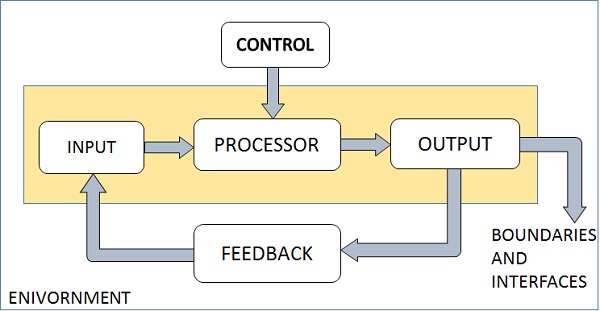
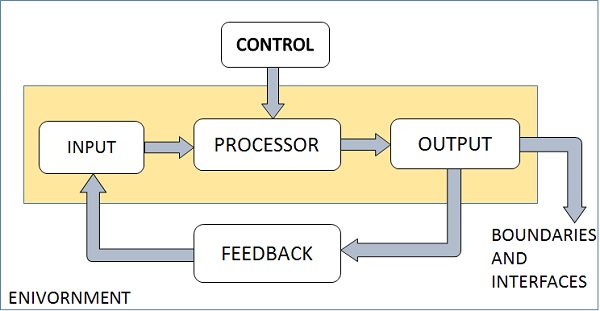
In the noam framework, I have elected to use the Greek letters for the points of the triangle. I have described them using various other language vehicles. Each point can be explained in a number of ways, or from different terminological systems that roughly mean the same thing. While I have a tendency to ascribe my preferred default words, adopting any one system, such as Contextual Behaviouralism, could lead to a fixity of meaning defined by that system. Rather, I chose abstract Greek letters in an attempt to convey a sense, rather than an exactitude, of meaning, that transcends specific academic fields and avoids restrictive definitions. The three main points on the noam triangle, therefore, have a bunch of fuzzy synonyms (other elements are also likely to do so as well). The following comparison table isn’t meant to be precise, but to raise attention to parallels and the range of meaning invoked. Note also terminologies may clash (ie “benefit” in the COBRA model differs subtly from that in the noam framework, though they are closely related.)
Sigma
Rho
Nu
Input
Output
Control
Context
Operant
Benefit
Situation
[Re]action
Value
Stimulus
Response
Reward
Environment
Behaviour
Need
My preference is that of Situation, Reaction and Value (reflecting the Greek letters), but this is not to be taken as canonical; other words might also do. Rather, situation indicates the inclusion of the state and resources of the actor. The “re-” in reaction is in square brackets to indicate optionality, as rho might indeed be a reaction or a novel action (operant) that is not related to the situation. Value is something that is important to the individual that is also salient to the situation – this does not map too well onto contextual behaviouralism, but “reward” is proximal.
When I was training for the Royal Navy, an officer had the catchphrase ‘teamwork lads, teamwork’.
So far this site has been a solo effort, mostly (and ironically) because I have not publicised it so well. But now I am beginning to come to the fairly obvious belief that cultural evolution and change and all that, is beyond my personal ramblings. I am not alone in this area, even if my perceptions of it are a bit oddball.
For this reason, I am working out ways of opening it up to others in the field. I am inviting other thinkers and practitioners to air their views. Eventually, I intend to put up a bulletin board if there is sufficient interest, but for now, I am going to reserve a space for relevant writings.
While highly academic peer-reviewed papers are invited, such precision is not necessary here. I am quite interested in other works, such as thought out speculations, research pieces that no other publications dare print, controversial hypotheses, science-fiction, even humorous pieces or cartoons on any area of wide cultural change, and institutional change.
I have no idea at the present time how this might go. I don’t want to be censoring or restricting thoughts, but on the other hand, I don’t want to be moderating against racist rants and Viagra spam. I will go into more detail when I’ve thought it through.


 CBD has been soaring in popularity with many recent news stories emerging. Is it really a panacea, or is it all just hyped up snake-oil?