1.4.3. Eka-strategems: Finding the gaps in the map
The “eka” concept origin
The “eka-” prefix is adopted here as a way of teasing out rare or unexplored combinations of traits, where those traits are established from prevalent specimens.
Mendeleev and Eka-elements
Dmitri Mendeleev is credited as deriving the structure of the periodic table of the elements by arranging known elements according to their relative atomic mass and valency. However, there were gaps in Mendeleev’s map where no known element existed. Mendeleev, rather than dismissing these as being non-existent in nature, figured out though that these positions could be placeholders for elements that remained to be discovered, thereby predicting their existence. He applied the Sanscrit numbering system to denote these tentative elements according to their position with respect to existing elements, for example, eka-silicone was a blank space sitting below silicon. This missing element was later discovered by Winkler, who name the element germanium. Periodicity continues to be valuable in locating new elements that can’t be found in nature but only exist in the laboratory owing to very fast decay times.
Mendeleev’s case is one of a more general situation whereby a logical arrangement, according to a set of traits, reveals “gaps in a map”: taxonomic ommissions that indicate potential entities remaining to be observed. The standard model of elementary particles in physics is another example of predicting the existence of yet to be discovered substances.
In such a scheme, traits of the observed specimens are measured, then charted across selected dimensions. Atomic mass and valence, in the case of the elements, were two dimensions that provided a flat table. Abstractly, many dimensions can be considered. The existing specimens can then be located on the chart, and where a position, in whatever dimensionality, does not contain any observed specimen, then that would suggest some theoretical type that remains to be seen. It also provides a clue to where to start looking. Cultural objects (aka clions) have a great many traits, and while a vast number of cultural permutations, such as technologies, routines and so on, have already been assembled and many of which rejected by selection pressures, it is clear that a great deal more remain to be invented and tried. Mendeleev’s methodology gives some insight into plying the traits of existing or past cultural objects to future cultural innovation. The “eka-” prefix is combined with cliological terminology to placemark these theoretical cultural developments.
Combinatorial phase space
Combinatorics can be applied to abstract and real systems and can consider any dimensions that might be investigated. The term phase space is often used in physics and complexity theory and is the space (or area, or line) given when the dimensions of interest are multiplied out. The two dimensions of latitude and longitude on a map project a logical phase-space of territory. This term is adopted here and used contextually such as “cultural phase space”: this is all cultural, technological, behavioural possibilities, whether realistic or not. The set of traits exhibited by a set of phenomena would constitute the dimensions and from this we can determine the logical size of the phase space for that phenomena.
As a simple example would be where we have a mathematical world consisting of a blue sphere and a red cube. We know there are two traits of shape and colour; we also know that shape has two states of {sphere, cube} and colour also has two states of {red, blue}. Even though we are only provided with two examples, by multiplying out the dimensions given by the traits,
Colour
blue
blue sphere
Eka-blue cube
red
Eka-red sphere
red cube
sphere
cube
Shape
we can now see four possibilities and thereby postulate that, in this world a red sphere and a blue cube might also exist. This ability to postulate other possibilities extends were we to upgrade that world to having more shapes, more colours, or even additional dimensions such as size.
In another simple abstract model, we might consider a set of objects and their set of traits, then analyse that set of objects for the occurrence or omission of each of the traits. Each trait then would have a Boolean value (aka binary) denoting the presence or absence of a given trait in a particular specimen. The dimensions of the phase-space would consist of the set of traits decerned. Note that the phase-space does not depend on the instances of the objects, but rather the number of Boolean traits (dimensions) that we admit into our examination. Were we to have three traits then that would be represented by a three-dimensional table: a cube, whereas a higher number of traits would be hyper-cubic. The number of “cells” in the arrangement of t traits is 2^t. It’s obvious that, this rapidly leads to a combinatorial explosion in phase space as it doubles for each additional trait included – 64 traits would give something like 18*10^18 (the chess number).
Evolutionary stumps &
the Library of Mendel
The number of species extant or extinct, that has ever lived is vast; the number of viable species that never made it is mindboggling, and the theoretical number of inviable ones is beyond imagination. We can see that, from even gross phenotypical traits of living species, that this power of two would consume many volumes if the number was printed out. Genetically, we at least have some basis for this vast phase space. Given the 4 letters of DNA and a sequence of about 3 billion of those letters (in human DNA), then 2^2^(3*10^9). This is just for human DNA and not the full picture, but the point is that the possibilities are somewhat big.
The Library of Babel is a kind of thought experiment where every combination of letters have been printed into volumes. Dennett extends this metaphor to the Library of Mendel: all the DNA combinations as thought up above. Out of the library of Mendel, most of the DNA arrangements would be gibberish, in ever-decreasing sizes: some might be partially viable but with mutations that prematurely kill it; some might be viable on some world, and some might be viable (in some epoch) on Earth; some might have existed and gone extinct, and a comparatively small (but sill staggering) number exist today.
The interesting comparison here is between those that would viable and those which do actually exist on present-day Earth. This is down to evolutionary fortune – phylogenetic scenarios of bad luck that thwarted a particular line of development. Of course, antecedent ecology is complex, but to simplify, perhaps overly, in the growing of the tree of life, some event cut off a budding twig leaving an evolutionary stump. A wholly different branch of viable possibilities could have emerged; biodiversity could have looked very different but these prunings have precluded whole swathes of viable lifeforms. Viability of form could be considered a phase space, a subset of the library of Mendel. Such could emerge naturally. Current biodiversity is just the example set provided. We can, therefore, posit that there are viable gaps in the map of life.
Phantasmagorical beasts
The fossil record remains to be discovered.
A child’s book consisted of a set of spiral-bound cardboard pages, each depicting some monster. The stiff card pages were cut horizontally into three such that the top depicted the head, the middle was the body, and the bottom showed the legs. These three sections could be turned independently such that the head, body, and legs from different monsters could be selected to create a new and amusing monster combination. The book provided a phase space of phenotypes: a rudimentary volume in Mendel’s children’s section.
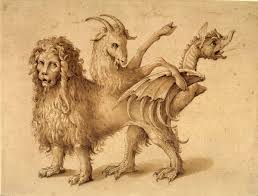
Ancient mythology was, and more recently, fantasy roleplay and science fiction are, adept at exploring phenotypical phase space liberally. All kinds of mash-ups have been imagined: from Minotaurs, Sphynx, up to Godzilla. Mostly utterly non-viable or at least not naturally evolvable, but with an amazing array of superpowers.
Wikipedia has this to say about Chimera.
The Chimera (/kɪˈmɪərə/ or /kaɪˈmɪərə/, also Chimaera (Chimæra); Greek: Χίμαιρα, Chímaira “she-goat”) according to Greek mythology,[1] was a monstrous fire-breathing hybrid creature of Lycia in Asia Minor, composed of the parts of more than one animal. It is usually depicted as a lion, with the head of a goat protruding from its back, and a tail that might end with a snake‘s head.[2] It was one of the offspring of Typhon and Echidna and a sibling of such monsters as Cerberus and the Lernaean Hydra.
The term “chimaera” has come to describe any mythical or fictional animal with parts taken from various animals, or to describe anything composed of very disparate parts, or perceived as wildly imaginative, implausible, or dazzling.
Mythological beasts present cultural aspects explaining unseen forces (gods, demons, etc) portraying and narritising the nature of those forces through animal traits and representations. They explore phenotypical phase space without regard to biological practicality, recombining features of one creature imaginatively with that of any other. In essence, phantasmagorical beasts are eka-creatures, but we can see them as an example of memetic recombination which has a certain poetic license. The memes of a lion, goat, and snake’s attributes have been recombined, to produce iconographic hybrids.
Genetic engineering and CRISPR
Some lion, but less goat and gryphon
Natural selection provided the dominant force for evolution until man discovered selective breeding. In selective breeding, the selection pressure for desirable traits, such as more nutritious grain, fatter cows, and faster horses, was introduced by the breeders. From the offspring of prized livestock, those with the most desirable features were bred. Both natural selection and selective breeding followed what was available to be genetically crossed within a species with the next generation of breeding chosen from the best results. Lines of descent, even if artificially devised, were produced naturally to give different breeds. Hybridization between non-compatible species was unfeasible, and chimaera could not be produced – gaps in the map. Access to the full library of Mendel was unavailable: the branches of the tree of life were too far apart.
Genetic engineering changed that. It became possible to splice DNA from incompatible species. With this technology, it becomes possible to create organisms that occupy the viable phase space that had been cut off by nature as evolutionary stumps. For example, neither natural selection nor selective breeding is ever likely to produce a cross between a spider and a goat, yet, with genetic technology, it has been possible to introduce spider DNA into goat DNA, producing a chimaera – a creature that resembles a goat, but produces spider silk proteins in its milk. The ability to manufacture strong protein strands has exciting implications for materials technology.
Recombinant DNA technology, otherwise known as genetic engineering, exemplifies the “eka” principle. Novel DNA combinations that do not exist in nature could well produce new sets of phenotypical traits. With genetic manipulation technologies such as CRISPR, it is now becoming possible to actually construct such novel DNA combinations. Genetic editing has some similarities to that of editing film whereby a section of cinematic frames can be cut out of one sequence of footage and spliced into another section. Similarly, chunks of DNA can be cut from one organism and sliced into the DNA sequences of another.
Narrative cinema, a tech-enabled medium for storytelling, returns us to the cultural analogue for one moment. Genetic modification provides an exploration of combinational rearrangements derived in a not dissimilar way as those phantasmagorical beasts – bits of one creature are stuck together with those of another. The idea of a spider-goat (rather than lion-gryphon-goat) could well be a mythical or roll-play monster. Of course, the narrative of mythology succumbs to the different selection pressure of telling spectacular (and re-tellable) tales to a wide-eyed audience. The 1963 filmic adaptation of Jason and the Argonauts is illustrative of tech-enabled editing of a classic narrative. Mythology would want to emphasise the ability to entangle heroes in monstrous goat webs rather than produce novel super-strong materials. Creative Imagineers have traditionally recombined memes, or mythemes (Claude Lévi-Strauss), as eka-beasts, that exist in a fantasy phase-space of gross anatomical traits; most of which are wholly inviable. Their origins are usually explained away as being something to do with the gods, although modern sci-fi has adopted the genetics trope albeit with a fair amount of poetic licence.
So, we have three levels of evolution, in its wider sense, here. The first being evolution by natural selection – a process that predated humans and indeed resulted in humans. Herein, variation by mutation and outcrossing is also a natural process; perhaps Darwin’s theory ought to be called evolution by natural variation and selection. The second process is that of selective breeding, which is evolution by natural variation and artificial selection. The third level, genetic engineering, is evolution by artificial variation and artificial selection. The fourth quadrant of artificial variation and natural selection is not covered here but rather is a sci-fi trope that might refer, say, to the accidental escape (or deliberate release) of some GM organism from a laboratory into the wild. While the first case is entirely at nature’s discretion, the others, have an artificial component that arises from human ideas and intentions: memes for a fatter cow, or milk yielding threads as strong as spider silk. Where humans have meddled with evolutions arrow, then novel species in genetic phase-space have come out of novel memetic eka-mashups arising in the human imagination.
The memes involved in selective breeding circumvented certain evolutionary stumps; they gave traits of breeds that supported human needs. The memes for more nutritious and disease-resistant crops and livestock are a viable, and valuable, subset inaccessible to nature evolutionary pathways. But the memes themselves were subject to an evolutionary stump. Mythology was capable of assembling imaginative chimaera but natural variation impedes what realistic breeds can be cultivated. The memetic eka-spaces could be envisaged, but populating them was limited.
Genetic engineering has opened that viable subset of what is biologically accessible further as it has enabled artificial variation. It is bypassing evolutionary stumps and opening phase-space up to further exploration. Genetic engineering is also opening up memetic phase space. While mythology has been creative in its products, they have always been relegated to fantasy and outside the remit of sober scientists. With the enhanced capacity to edit and splice genes together, then the meme pool has been loosened-up somewhat, and novel recombinations are now becoming a realistic possibility available to intelligent design. There are still many limits but the selection pressure is now coming down to the desirability of GM organisms, along with the imagination and sanity of the scientists.
A carpracnid
Memetic traits and phase space
Mashed up mythological creatures, as recombined mythemes (and memes), show how eka-space in the vast phase space of imagination can be explored. Of course, these are fictional, made-up, and not part of the reality we live in. Fictions are narratives derived from real components but assembled into wholes that are non-real, sometimes plausible, sometimes not. A counter-factual story (for example Iron Sky) takes historical elements and rearranges them in a way that goes against what the history books tell us. On the other hand, speculative science fiction projects forward in time to events that could yet happen. It entertains changes in PESEL (political, economic, social, environmental, legal) traits that could affect our lives and the implications of doing so. This kind of science-fiction narrative generally extrapolates from what is known of the present and considers an array of potential developments that would produce a plausible scenario. In essence, they are thought experiments that explore the phase space of possibility, of how memes might recombine as some eka-future. To grab an audience’s attention, these hypothetical situations tend to contemplate some unexpected spectacular impact and of the possible futures, they illustrate the outliers rather than provide an accurate prediction of humdrum likelihoods. In a way, futurology, even technology roadmaps, could be considered as speculative science -fiction, but in a form that emphasises high probability over audience reception. They too are cerebral sojourns into the envisaged phase space of how memes may be combined, but they consider the most valent eka-combinations in an attempt to forecast how things are most likely to actually play out.
Culture is a combination of memes, and cultural evolution is the continuous outcrossing of those replicating memetic elements into novel assemblies that succumb to selection pressure. The variation and selection arise as a mix of analogues of natural selection, selective breeding, and even intelligent design in accordance with the competing pressures of the populus. The meme-gene metaphor becomes useful as cultural evolution has some dynamics in common with biological evolution. These dynamics account for the diversity and shifts of culture but mediated by information transmission throughout a social system. Furthering the meme-gene metaphor, we can see a parallel between the genetic phase-space of the library of Mendel and the memetic phase space of culture. This hypothetical memetic phase space would consist of all the theoretical combinations of memes, and similarly, would be absurdly vast. Only a fraction of this space is viable as culture, and yet a smaller fraction of what is viable has ever been realised, much of which has become extinct. Again, historical events have shaped the pattern of descent which have lead to extant cultures of the present day. Things might have gone very differently and other paths through viable cultural phase space might have been followed, but these have been cut off, as cultural evolutionary stumps, and exist only as counterfactual histories.
This means, as with biodiversity, huge tracts of viable phase space have become inaccessible to natural cultural evolution. However, fictional phantasmagorical cultures are open to the imagination, by mentally mashing up the memes – it is possible to contemplate how an eka-culture might behave.
Eka-strategies and new memes
Genetic engineering has made chimaera which could not be produced by natural selection. Extending the meme-gene metaphor, then it becomes possible to contemplate how a form of “memetic engineering” might make those spaces cut off to natural cultural selection reachable. As previously argued, myth, fiction, science-fiction, and futurology produce novel narratives, which are recombinations of memes. Indeed, all applied science, innovation, product design, town planning, civil engineering projects, political manifestos and so on, are recombinations of memes. Until they are implemented, they are fictions: projections into the future based on what is currently known.
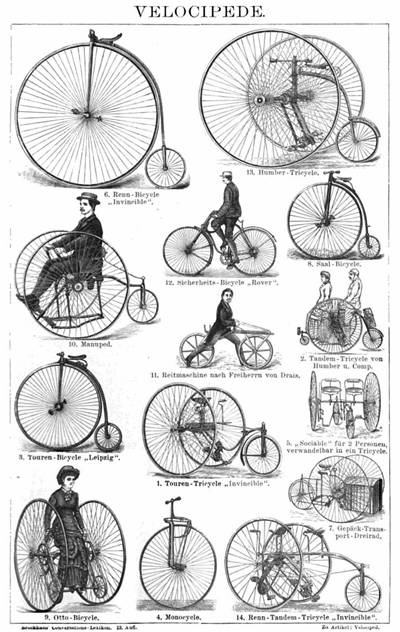
Memetic engineering and cliology started off as speculative science-fiction; as hypothetical recombinations of scientific principles that had a fair likelihood of being realised someday. These pages are an effort to further their realisation as scientific fact. The point of cliology is to systematically generate yet newer science fictions through forecasting and fabricating the future. But these science fiction are not meant to be astounding stories as thought experiments or entertaining cautionary tales. They are not necessarily spectacular, rather, they deal with real-world issues and might range from addressing climate change to designing and marketing a new form of personal transport.
How might engineering principles be applied to such eusocial ends? For product development and innovation, the goal is to find variation in design then subject it to practicality and market forces. In memetic terms, all artefacts, designs, and products are the expression of some memeplex (aka cliome). Hence, the exploration of memetic phase space, particularly those viable evolutionary stumps will yield, if not marketable products, then at least new insights. Dealing with cultural practice takes a different mode. Cultural practice whether prosocial or maladaptive is the expression of memes as behaviour. The memes, being contagious, spread through the social network and are expressed as collective behaviour at a populational scale: waste, smoking prevalence, inequality and so on are attitudinal and behavioural expressions of memes. The aim then is finding novel and more beneficial collective behaviours that can spread through the social network and replace the maladaptive effects. Similarly, the memetic phase space provides an exploration for replacement practices. The envisaged methods would also indicate analogues of R0 and CFR of various strains, thereby suggesting candidate eka-strategies for further modification and release. Green issues, for example, have permeated into public consciousness and has increased the prevalence of recycling behaviour. However, significant waste (eg in the fashion industry) is still being generated. Shifts require the propagation of awareness and effective action, that is, more effective memes, which are likely to be found in the unexplored phase spaces of cultural systems.
Even given a small set of traits, the combinatorial explosions of potential variations rapidly become unwieldy. Obviously, the calculations involved are best left to computers although the full scale of the problem is stretching present technology and will require advances such as those promised by quantum computing. However, technology is where it is, nor is it necessary to throw brute force computing power at the problem. Providing careful consideration is given to reducing algorithmic complexity, then it should still be possible to gather beneficial results in the near term. In conceptual design, a system for forecasting and fabricating new and effective memes would require:
Scooping current memes with regard to their cultural effect.
Calculating recombinations and locating eka-solutions
Assessing routes to their implementation using analogues of phenetic and cladistic methods
Providing graphical human-readable interpretations of the deductions
Setting forth a strategy for dissemination, monitoring, and feedback of the effects.
Cliotechnology may promise, or threaten, to reveal unexplored territories: a road-map to some brave new world.