
Conventional SPAM (formerly MAPPS)
The cluster of activities, which includes marketing, advertising, promotion, public relations and sales, are commonly associated with the commercial aim of influencing customers and their buying behaviour. Sales have been looked at separately as it has a clear application of cliology in the form of MLM. Perhaps the cliological aspect may not so blatant in the practice of influencing customers beyond the domain of outside of sales, however, in that sales, promotion, advertising, marketing (herein called new improved SPAM) all involve the manipulation of information and messages so as to adjust consumer cultural behaviour, then they have scope for a cliological flavouring.
Commercial persuasion
The SPAM activities are widespread in commerce, but they can be seen as being among a more general group of persuasive practices that extend beyond business as many other areas also involve persuasion at a population level. Politics, religion, military, education, health care, and other concerns not thought of as commercial enterprises, still influence public opinion but usually adopt a different language. Whatever the proprietary terminology, be it of strategic communication or psy-ops, the commonalities of practice and the aims of influence can be regarded at a general level; it is at this level of abstraction that cliology speaks. Cliology is jargon loaded because its unique lexicon helps to define its domain of concerns thereby avoiding confusion with the meanings of specific applications. In explaining cliological principles through the use of real-world examples though, the business domain is probably the most familiar.
Strategic communication & strategic information
Cliology, in essence, is the science-based engineering approach to the strategic use of information and communication. This aspect of cliology has its roots in 19th and 20th-century communication practices as proposed by Edward Bernays and David Ogilvy among others. Going further back, in 1622 the Catholic church inaugurated an administrative branch called the Congregatio de Propaganda Fide (Congregation for Propagating the Faith) as part of its counter-reformation initiative. From this congregation, we obtain the term propaganda. Propaganda, in itself, is a neutral term. However, the two world wars of the 20th century attributed propaganda its political meaning of manipulating the thoughts and attitudes of a population through mass media to serve some agenda. Bernays originally used the word propaganda, but its contaminated meaning drove him to derive a more palatable term: Public Relations. Bernays was the nephew of Sigmund Freud who contributed to the scientific understanding of psychology and human behaviour. Taking some of his uncles approach, Bernays sought to bring some psychological science to his public relations. He even published an essay entitled ‘The Engineering of Consent’ (a theme later taken up by Herman and Chomsky in their ‘Manufacturing Consent’).
Of course, even before the catholic church’s strategic theology, in the classical era, rhetoric was big business. The sophists (around 600 BCE) honed the art of persuasion, while Socrates systematised the discovery of truth. The art and philosophy of rhetoric persist in modern-day such as Toulmin’s uses of argument and “slight of mouth” hypnosis drawn from NLP. there are a large literature in the area, not only academic treatments, such as Cialdini, of structure of persuasion and deception (which now consider cognitive biases, neuroscience, game theory and biosemiotics), but also many “self-help” style books, usually read by hungry salespeople, that explicitly detail how to persuade and influence.
Persuasion, influence, and effective communication still are big business; perhaps bigger. Understanding your customers and getting a message across to them is what persuades them to buy your product and not that of the competition, and it is critical to sustaining commerce. A truly great product will falter if insufficient people are willing to pay for it. If those who do want the product are unaware of it, then the better product will be outpaced by a lesser rival. The job of marketing is to find out who wants what, from what is available, and for what price. Advertising is about tailoring the message to fit with, and get it out to, potential customers. This is about specialist handling of information, and lucrative industries have emerged to deal with communication on behalf of commercial enterprises. The red queen race of economic forces demands not only better (or at least more fashionable) products, but also more effective information handling and communication. Much has remained a creative art, but understanding the science of the human mind and consumer behaviour, can confer a competitive edge on influencing decisions and actions of a population, which translates into profits.
As with Bernays, David Ogilvy, the “Father of Advertising” extolled the virtues of applying science to commercial communications, having read Claud Hopkings’ ‘Scientific Advertising‘. Marketing, as an applied science, continues to become more prevalent with such influences as behavioural economics, or neuro-imaging of consumer’s reception to images (cf the cola wars).
Hence, when seen at a population level of human information science, marketing, advertising, promotion, PR and other related activities have much to gain from a rigorous understanding and applicable framework given by the underlying science. This extends beyond the commercial realm to all that is given to plying persuasion.
Cliological orientation on SPAM
Neither cliology nor memetics are anything particularly to do with the fields of professional persuasion. They are, however, concerned with information and communication science, and have implications for the population level of human behaviour. Consequently, cliology and memetics can inform marketing, advertising, promotion, PR and related activities by providing an understanding of how information propagation influences collective consumer behaviour. Furthermore, as the engineering emphasis of cliology is intentionally practical and aimed at changing cultural practice, then that intent can be applied to making commercial communication more effective. Again, the language of cliology is technically specific, but it can be rendered into more familiar terms. The focus is at the population level of activity, and the emphasis is on the flow of information that gives rise to that activity. The main difference in adopting the languages of cliology and memetics comes from the radical shift in perspective. When we take on a “meme’s eye view” everything begins to look a little different. Not only do the raw forces of nature that drive evolution become highly salient (variation, selection, reproduction), but we are challenged to ask: who is this good for? Orthodoxy would have it that markets are good for the customer, the business, the shareholders, the economy and so on. The alternative view has it that commerce is a mode of memetic transmission that is good for the selfish memes by allowing them to spread and survive. The dysteleological caveat applies of course: memes, like viruses, do not really have foresight, selfishness, or interest, it is just more convenient to talk as if they have.
The principles of deme & meme
The two principal components of the cliological view of SPAM are those of the deme and the meme (aka cliome). The meme has been covered extensively on this site, but for the field of influence can be considered as commercial communication. A message, such as an advert, that is intended to influence, perhaps purchasing, activity. Memetics is explicit in looking at the propagation of viral marketing.
Deme is of Greek origin which referred to a suburb of Athens. It is etymologically related to words such as epidemic, academic, and demographic and conveys the idea of some population. In biology and evolutionary computation, a deme refers to some isolated subpopulation. For cliology, deme is practically synonymous with demographic as used in marketing to segment target markets. For technical purposes though deme has a more precise sense. It is defined by the group of individuals who hold some cluster of ideas; adherents to a particular memeplex. It extends beyond the idea of “market” to give the idea of a category of community (such as a community of practice) that is not necessarily co-located. Demes arise from clusters of trait permutations and communities can overlap. Their membership is also fluid as an individual can be a member of several demes, or can shift allegiance from one deme to another – indeed, a deme might even carry no adherents at all. The idea of a deme is particularly useful in apprehending the structures and relationships between social groups as it allows us to view culture from a variety of angles, whereby each perspective highlights and brings into focus the analytical aspects we are interested in.
While the deme idea is an abstraction, organisations and market segments can be considered as forms of demes. This holds even if what we consider constitutes an “organisation” or “market” to be rather loose. Here though, in the business sense, a market would be the cluster of customers (or organisations) that have a particular need, while an organisation, a vendor, would employ individuals working to serve the needs of the market. Minimally, the commercial demes of the vendor (organisation) and market would be defined upon the needs of the customer and employee respectively – which can be seen in memetic terms. The concepts of buying and selling are of course cultural and therefore memetic. A customer would inherit memes (ideas) about the problems they have and possible solutions they want, they may even have memes regarding who they might buy from. The vendor would have memes in the form of the solution to a problem, as well as how they go about promoting their services.
Marketing
The essence of marketing is to match some need within a population with some solution they are willing to pay for. This done, then further activities such as advertising and sales can be conducted. Translating the principles of marketing into cliological terms, we have the two sets of demes mentioned above: the set of customers needing a solution to some problem and a competing set of vendors who are offering some solution to that problem. In a physical market we have stalls such as butchers, fishmongers, greengrocers and so on. The passing trade would come from people wanting sausages or apples or other things. The two demes can be put down as axes of supply and demand thereby forming a matrix – the intersections determine the appropriateness of the vendor to the customer. Such is standard marketing but viewed another way, it becomes a process of matching memes.
The memes of buying and selling are endemic to consumer culture. More specific are the memes that determine specific problems and solutions. For example, homeownership is a meme, as is having a lawn and garden; keeping that lawn and garden neat and tidy are memes manifesting as social norms. The solution of possessing and using a lawnmower are memes, and the lawnmower itself is a collection of technological memes assembled into a device that enables the cutting of grass. The memes of the gardener are thereby related to the gardener’s values and hence become the memes of market demand. The assembled memes of electrical motors, cutting blades, wheels, and grass collection offered by the lawnmower manufacturer, via a distributor, are intended to meet the value of some market by supplying a solution.

A memetic view of marketing essentially considers the matching of both memes. It would look at each of the traits from
a binary perspective of either having or omitting a given trait, and draw up the portraits of both the customer and the product. Example methods such as cladistic or phenetic analysis would cluster these two sets of traits, and the intersecting matrix would be seen as a trellis – a visualisation of one tree on each of two axes thereby forming a grid. The two trees branch according to the similarity of features (of products or customers), and their branches overlap in terms of customer types and demand for product types – these are the intersecting cells in the grid. Many of these crossings would be irrelevant (people in high-risers rarely need lawnmowers) but a high demand intersection would signify a “bulls-eye” customer base – of which the grid may indicate a few cells. Marketing would be interested in finding the high-demand intersections; in determining what traits of the product co-vary with what traits of the customer. Were this co-variance established then it would be possible to review the intersections of the trees on the trellis to see how well demand is being met and by whom? Such findings would feed into activity plotted on the Ansoff Matrix-like product or market development.
Propagating the meme: Getting the marketing message across
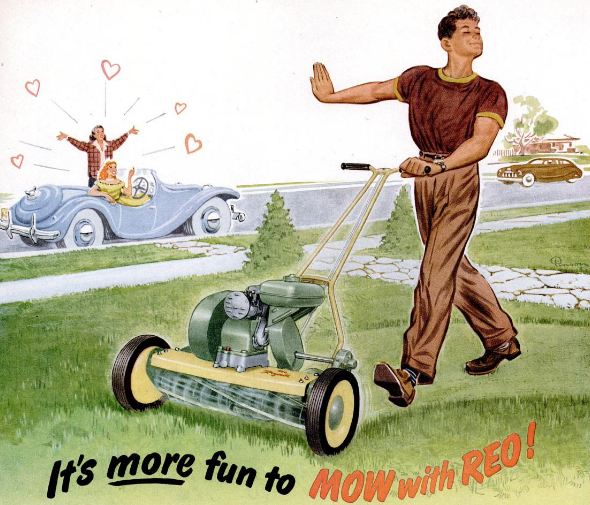
Advertising, promotion, public relations, promotion and so on, are almost entirely informational activities and might be considered as being different modes of each other. Advertising is predominantly about sending an explicit sales message to potential customers, enticing them to buy the advertisers brand. A classic model of advertising (E St. Elmo Lewis), and there are others along with variants, is the AIDA model, Which ahs been examined cognitively, neurologically etc. (ref). This can also be given a memetic treatment within the cliological framework (FABULA). Of course, AIDA (Attention, Interest, Desire/Decision, Action) is from the advertisers or agency perspective of the customer and probably in the name of profit. The “memes eye” view though might mimic the action of some biological agent where the virus (or bacterium or whatever) “wants” to survive and reproduce. So what would the advertising analogue be? Well, the core memes are those expressed as the product or service – a lawnmower, for example, being an expression of a set of memes. For these memes to “live”, they need to inhabit minds: the minds of proud garden owners. Of course, it is not enough for those people just to dream of lawnmowers while letting the grass grow; the solution is to have access to and use the device. Hence, in this case, the lawnmower meme, to persist, needs a demand for its expression and instrumental use. The demand is the incentive for gardening tool manufacturers and vendors to invest in, construct and distribute goods. That is, the profit needs of businesses in the supply chain are met by expressing the memes of the lawnmower itself (ie manufacturing to specification), and the memes of sales and distribution involved in meeting customer demands (which are also memes). A supply chain then can involve numerous sets of memes: a whole ecosystem of competing and collaborating memes in itself whereby certain meme sets are mutually symbiotic, colluding in their self-interest of sustainability.
An advert, and for that matter, the whole advertising industry, can be seen as one of those meme sets contributing and benefiting from their pact. The meme for a lawnmower needs to do its job of making lawns tidy; it also has to “infect” the minds of gardeners whereby they perceive it as the solution to the trouble of having overgrown grass. In this ecology, lawnmower memes are competing with other species such as the memes of paving slabs. Selection and survival occur based on how pervasively information propagates through the population. Compartmental epidemiological models are illuminating. The “susceptible” market segment of proud homeowners, having become “infected” are likely to exhibit “symptoms” (or an alternative metaphor of seeking “medication”) of going on-line, or to the garden centre, or elsewhere, to get some relief from their ills. Perhaps the main difference in the viral metaphor is that of communicating the idea of buying some tools, vs spreading an existential threat to humanity, is that of CFR (case fatality rate) – gardening implements, by the large, are probiotic, having a negative CFR! Of course, purchasing some solution involves a plethora of factors and decisions on behalf of the customer, but these decisions are based on the awareness, or accessibility of information, of the costs and benefits of the alternative solutions. Lawnmowers rely on the idea that the benefits of using lawnmowers will “infect” gardeners. Word-of-mouth, viral and MLM are epidemiological analogues of the spread of an infection which could equally be applied to gardening tools; these are sets of memes in themselves and are examined elsewhere. However, advertising is well established as a means of delivering a sales message, a memetic infection aimed at a susceptible customer group.
From an ecological perspective manufacturing and advertising industries (along with their other allies) are sets of mutually symbiotic memes; the idea of owning a lawnmower and a lawnmower advert are specific mutually symbiotic memes: adverts promote lawnmowers; lawnmowers demand adverts. Social transmission is like an outbreak of a virus; advertising is more like an ICBM armed with a bioweapon warhead. The memetic principles of infecting the susceptible are the same, however, an advert is very explicit about its intent – it is a meme that exists to propagate the memes of that which is being advertised. In difference to word-of-mouth memes though, the coupling of product and advert are inextricable. A word-of-mouth meme can be disparaging of a product and still propagate, serving as a warning to wary potential customers. An advert, on the other hand, is codependent with its product. By way of an anecdotal counterexample, the old advert featuring Leonard Rossiter and Joan Collins is fondly remembered as being hugely successful in advertising Martini; it even won awards. This was a pity really, as the advert was actually for the competition Cinzano – the agency got sacked! A further distinction then is that adverts are naturally biased in favour of their product as a matter of survival. The advertiser and agency have far more control over the message than they do over wild strains of memes, but this presents a paradox on the basis that the savvy marketplace is well aware of the vested interests and has become cynical and resistant to such puff pieces.
So, an advert is but a component of an industrial scale memeplex, existing in a vast narrative ecology. But what does this mean in cliological terms? Memes survive by occupying minds, spreading from person to person. In order to do that, they must first grab human attention, get into the mind, linger around, then, if the meme is functional, (ie contain some instruction which evokes some practical routine in the service of some mutual-benefits, other than just the action of spreading the meme) then it will possibly inspire some action.
Lawnmowers do not make baby-lawnmowers, nor are they particularly good at selling themselves. Left to their own devices, they just rust! The “memes eye view” seems humans as the reproductive machinery of artefacts which usually have some instrumental value to the user. Having the right tool helps to get the job done. Acquisition of that tool is in the service of that job. Often, it is easier, given a cost-benefit (COBRA) analysis, to buy a complex tool rather than attempt to make it, which often requires further specialist tools. A supply chain of increasingly complexed artefacts is assembled, whereby the step increases in complexity correspond to added value. This is often done in the pursuit of profit.
But profit ultimately relies on the meme being dispersed. That is that the idea of the solution reaches the consumer and that the product is distributed. Without meme dispersal, products would just pile up at the end of the assembly line, or never attract investment to be made in the first place.
Well, an advert (or other means of promotion) can be considered as a reference to a thing rather than the thing itself: it is an indicator, a pointer (ie. to a solution to all your overgrown lawn woas). The product and advert are two essential organs of the overall memeplex. The advert uses information channels to grab customer attention and induce action. Direct experience of the benefits that a product gives is usually the clincher. However, the customer needs to know that the product exists, the potential benefits, and where to get a demonstration. This operates in the world of information: it cannot be done in the world of atoms, nor is it necessary to do so. Getting initial customer awareness and interest can be done through information media alone; its purpose is to induce the subsequent action of finding out more, such as wanting a demo, and knowing where to get one. An advertising meme then can be thought of as having the referential information function of attracting customer interest and instructing them on how to get a demo.

An advert then is the component of a memeplex that gets the interest in the product component of the memeplex out to the customer and can be seen in AIDA terms.
A: A meme needs to get into minds. The “attention” element presents novel stimuli sufficiently spectacular that it interrupts patterns of a person’s behaviour. It provokes sensory arousal that captures and redirects the individual’s awareness towards the emerging event.
I: While attention is like hearing a loud bang and turning to see what caused it, “interest” is about supplying information to maintain that focus. If the bang is nothing of particular concern then it can be ignored and you can go back to what you were doing. The “interest” part of an advert helps the observer determine if the perturbation is of concern and whether they should continue to pay attention to it. In other words, is it something they could be in the market for – do they have an issue with long grass?
D: Assuming that it does concern the reader (they do have a grass problem) then the “decision” or “desire” aspect indicates the benefits of a proposed solution. Given that the prospective customer does have that specific problem, it depicts that not only can they can do something about it, but argues that they should decide to do so (in a specific way). They do not have to directly experience the benefits yet, just that they need to know enough about the desired benefits to motivate them to go and see the thing, or at least take action to gather more information. Here, the aim is to convince the potential customer of the plausibility that the pro-offered solution may meet with their cost-benefit analysis sufficiently to want to pursue the idea.
A: The final section is the call to “action”; an explicit instruction about what to do now. While most people know how to shop (which is an ambient meme in western culture), explicitly telling them what to do reduces the cognitive load and uncertainty. Real people are barraged by advertising stimuli and can easily forget, or lower the importance among the competing sales messages. As the advert has captured the interested party’s attention, then it is wise to use that attention while it is there. Furthermore, adverts can get lost. If someone wants something and knows how to get it, then they are more likely to act. This action could be a direct appeal to make the purchase, or it could be an invitation for the customer to find out more.
We can see advertising in both AIDA and memetic terms, but does this alternative view contribute anything more to AIDA than just another way of seeing things? If it does, how can cliology employ the memetic view to make for a better advert? Well, neither memetics nor cliology are specifically about commercial communication. They are about apprehending evolutionary models of information transmission, cultural evolution, and how this knowledge may be used for intentional prosocial purposes. They operate at a more general, and perhaps abstract, level and consider the formation of culture from the selectionist point of view of information flow. That advertising and related activities can inherit this general perspective enables us to understand what kind of thing advertising is. The bigger picture goes beyond, while retaining, the commercial intentions of advertising, to reveal the underlying social dynamics. In other words, advertising is a species of evolving, culture shaping, information flow. Adopting advertising as an application of cliology unleashes the science, the symbolism, and the tools of cliology. It aligns and furthers advertising with science.
Ogilvy’s view was that an advert should sell and lamented the industry’s preoccupation with any creativity that did not serve that function. Cliology, vaguely stated, is about applying cultural evolutionary psychology for prosocial change. If advertising were to be a form of commercially applied cliology, then that prosocial change (for a certain array of stakeholders) would be better selling through science. Products, marketing, sales and the whole area of business economics are, after all, intrinsic elements of western culture. An advert then, is culturally influential; advertising is amenable to the principles of cliology.
To address the selection pressure of practicality, cliology has built a hierarchy of conceptual frameworks, and software implementations are in development that realises these frameworks as useable tools. These general frameworks and tools, therefore, need tailoring to meet the specific needs of advertising. Immediate recognition of applicability is apparent in three of the lower frameworks as these address the individual (rather than populational) level scope of influence that concerns advertising.
- Noam: the noam framework is about the dynamics of an individual’s response to a stimulus according to their values, beliefs, and capabilities. It covers engagement with the situation directly along with behaviour for the acquisition of supporting resources. It also models the interactional patterns of behaviour between people. The noam framework is appropriate for modelling out a potential customers values, problems, and needs, and what they need to experience and do in order to service those needs; what stimuli would induce specified behaviour; what sales message would likely result in purchasing.
- FABULA: the Fabula framework goes deeper into the components of stimulating behaviour. It is an elaboration of the familiar “FAB selling” method and a deep-dive into the relationship between presented features, benefits and action – stimulus, value, response. For an advert, FABULA would model out the core values of some market (a deme in cliological terms), a specified behavioural response of the customer, the stimulating features of the communication, and would link those components together as a behavioural programme.
- Toulmin: the Toulmin framework models argumentation. It makes explicit and convincing the reasoning as to why FABULA components are coherently linked and should be accepted. For an advert, it would forge associations among a customer’s values: the stimuli of experiencing a problem and the relief attained through enacting a specified behavioural response (buying a product).
As a perhaps philosophical distinction with Ogilvy’s ethos, there is a slight shift from the selling of the vendor, to the buying of the customer.