What is cliology: the muse, a confluence of ideas and seeing the matrix
Clio is one of the Greek muses: the muse of history and fame. Cliology then is the “-logos” of history and fame; it is the science thereof, and in difference to commentary and corollary, seeks to identify the social, cultural, psychological, biological mechanisms of history, and forms a mathematical model that underpin both the past, the present and the future. As such, it is a meta-history, a futurology, and an engineering discipline, that is applicable to directing the course of history and cultural evolution. Humans have always attempted to affect history, but have incompetently modelled with it for their own selfish benefit at some scope. But what if, what was once a craft, a process of trial and error, were to presents some promise (or threat) of becoming an exact science? A difficult, uncharted and nascent aspiration maybe, but on the other hand, a seeming inevitability. Envisaging culture as a complex dynamic, as something that can be nudged, either through libertarian paternalism, or totalitarian despotism, is to see the matrix. This is to apprehend and debug the underlying machine-code of culture. Cliology would envisage the instruction set and algorithms for doing so.
Cliology’s origins in science fiction
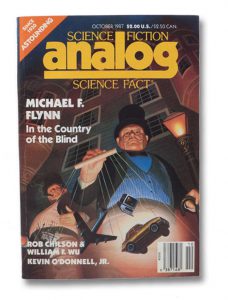
The term “Cliology” was taken from Michael F. Flynn’s novel ‘In the Country of the Blind’, which was first published in Analog magazine. This is an example of speculative science fiction on its way to becoming fact. In the story, a secret society of Victorian social-engineers used Babbage difference engines to forecast and steer the course of history, nudging events towards their utopian ideals. They employ scientific and mathematical treatments, along with their version of memetics, to steer society using a method they call cliology. The narrative explores some of the moral perils of such social management and partial foresight. The subsumption that ‘the one-eyed man is king’ (Genesis Rabbah) alludes to the risk of hubris and fallibility in imposing utopia.
A reprint of the book contains an appendix that posits how such a cliology might work. Previously, Asimov’s Foundation trilogy portrayed a similar concept of Psychohistory.
A real cliology of scientific meta-history
In reality, the Victorians and poly-math thinkers around that era did start to consider interdisciplinary lines that could have been the foundation for a cliology. Quetelet, Darwin, Spencer, Galton, Brea, Comte, pondered on this, though this was at a time and political environment of British colonialism and European conflict. Their thinking was mashed-up with justifications and propaganda for imperialism and became a background against which “social Darwinism” became tarnished with “scientific racism”, arresting the development of cultural evolution theory.
The science is not the fault. Evolutionary approaches in social science might study race, and indeed the phenomena of social attitudes towards race, but ultimately the problem lies within the agenda of groups and individuals that hijack and attempt to politicise that science for their own ends. Either way, scientific approaches and their application are neutral in themselves, such tools are like a scalpel that could be used to harm or heal, how they are used is down to those who wield them. The ploughshares or swords paradox!
Using the term “social Darwinism” as a political bogyman has done little to encourage the evolutionary study of socio-cultural phenomenon. More constrained forms of sociology and cultural anthropology have dominated that academic territory, but often stopping short of the Darwinian inference. Many who have independently seen the connection between Darwin and social phenomenon have run the gauntlet of accusations of scientific racism; a few have persevered undeterred by reputational stigma. Socio-biology, evolutionary psychology, memetics, and behavioural economics are examples of interdisciplinary areas that have emerged, along with many more focussed efforts such as cliodynamics (Turchin), cliometrics, and now cultural evolution. In behavioural science, Biglan has suggested functional contextualism as a contender for changing cultural practices. Perhaps behavioural economics is the closest so far to a cliology, and the principle of libertarian paternalism, explored in Thaler & Sunstein’s Nudge, offers an attitude for applying science to social influence. However, cliology, in difference to behavioural economics, emphasises the biological, rather than the economic; or perhaps we might say the bionomics of human primate ecologies.
Futurology, forecasting and marketing
The aspirations of cliology, as presented here, are somewhat more modest than attempting to create utopia. They are directed more towards academics and practitioners who already apply a kind of “craft” cliology in their work. Influencers and others who consider how the future is shaped, such as management, marketeers, and politicians, mostly operate by intuition and experience. The vast majority of craft-cliology is perhaps somewhat mundane: in forecasting markets, informing public policy, and propagation of preferences among groups of people, such as political or advertising campaigns. For those who dabble in the dark-arts of cultural influence, and to some extent that is everybody, then cliology is intended to offer an enlightenment: a methodology, tools and techniques for better precision forecasting and futurology, and more confidence in implementing our plans. Cliology is not just an academic description that provides a theoretical map of culture, it also charts a course such that we no longer doomed to navigate to the future-history blindly, or repeatedly. It offers a rigorous science of culture, but one which ultimately leads to praxis – an engineering of culture. Cliology of some form, a meme by any other name, will be inevitable! So perhaps we should look to Flynn and be mindfull of the pitfalls.
Relationship of cliology to Cultural Evolution, memetics and other close ideas.
Cliology is more of a human pastime than an academic discipline. We are all cliologists! We take our experience of the past in an attempt to make our way in a complex social world. This endeavour predates civilisation. Now that previously isolated and disparate themes are converging, a structured coherent approach demands a name. There are a few related and overlapping areas; particularly those coming from cultural evolution and memetics. Cultural evolution suggests that the diversity of human culture can be accounted for by processes of variation and selection, something akin to that of Darwinism. Much effort is directed towards anthropological themes, considering the origins of culture, language, toolmaking and so on. The flip-side though is that of applied cultural evolution, which considers the dynamics of society, with a view to informing public policy and building better social systems. Memetics, another related topic takes a viral-like chunk of socially contracted information that mutates and evolves, the analogue of a rogue DNA replicator, or a kind of “chromosome” that is expressed as culture. In terms of cliology, we would envisage how parallels of gene-mapping and epidemiology would give us a picture of the flow of culture, and the historical evolution of the diversity of behaviours, organisation, and beliefs. For directed interventions such as social policy and economic management, we could consider analogues of cultivation and agriculture, or more advanced methods parallel to gene-splicing, which we might call memetic engineering.
Cliography: sketching out the tree of culture
By the word game of appending suffixes to the prefix of “clio-“, a couple of new re-splicable permutations are those of “cliography” and “cliogram”. As you would expect, these correlate to a written sketch and drawing of history and fame. The tree-of-life is an example of a dendrogram, a phylogenetic tree that concurs with Linnaeus’ classification. Other types of dendrograms are phylograms, cladograms and such forms as Hillis Plots. A cliogram then would represent a Linnean taxonomy of culture, breaking down respectively into various ranks. This would, from the root level domain of cultural objects, break down into species such as a specific production model (eg. of a computer monitor). In this way, it is proposed that the whole domain of artefacts, behaviours, and any other cultural item, can be constructed into an alpha-taxonomy according to their traits. Much as a taxon or a phenon are the operational taxonomic units (OTU) of construction, the “clion” (any cultural object) would be the OTU of a cliogram. A cliogram then would represent the relationships of resemblances between cultural objects.
The implications of meme mapping of cultural evolutionary diversity
An alpha-taxonomy of cultural objects would depict the apparent relationships between things such as motion pictures, automobile components, religions, music styles, architecture, management fads, alcoholic beverages, and just about anything that humans have contrived. We would be able to cluster these things by resemblance. By way of example, for film (or phylum in a North East UK accent) we have clusters of genre (which might equate to the biological rank of genera) such as: comedy, horror, romance, western. From this tree then, it would be possible to tell how similar or distant cultural objects, like movies, where away from each other and, given some metric of similarity, then we would be able to put numbers to such a distance. For example, Gone with the Wind, and Pulp Fiction might be 0.214 (number made up for illustration). Intuitively, we know that these two movies would be closer related than either are to a type of whiskey bottle; a numerical approach would allow us a measurement.
A numerical measurement then would allow us to perform such methods as cluster analysis, whereupon we can compare by traits to form groups of taxa. This is called numerical taxonomy, or phenetics (where taxa are given the specific name of phena) whereupon we have access to a precision map of culture. The actual calculations are quite intricate and laborious so the number crunching is best left to the computers.
Further, we might infer that, through copying and modification, new cultural objects come into being. A myriad of new commercial products and services are introduced on a daily basis. A new film release is often a re-hash of an older narrative with an up-to-date twist: reboot is the word. Such a new release would inherit many of the tropes from the older versions, and so is likely to be found in the same cluster. We can then infer the loci of inheritance and innovation according to our metric, and we can determine a pattern of descent. For example in the Zombie sub-genre (species?) of horror, we see the undead narrative pass from voodoo of Haitian folklore, through the Ramero Standard Zombie (RSZ) of the 1970s, through to the viral epidemic super-zombie apocalypse. The alpha-taxonomy, with the inference of inheritance, becomes a beta-taxonomy, or cladogram (wherein taxa are now called clada). In this, we are not only showing patterns of resemblance but now also of how the historical patterns of evolutionary development.
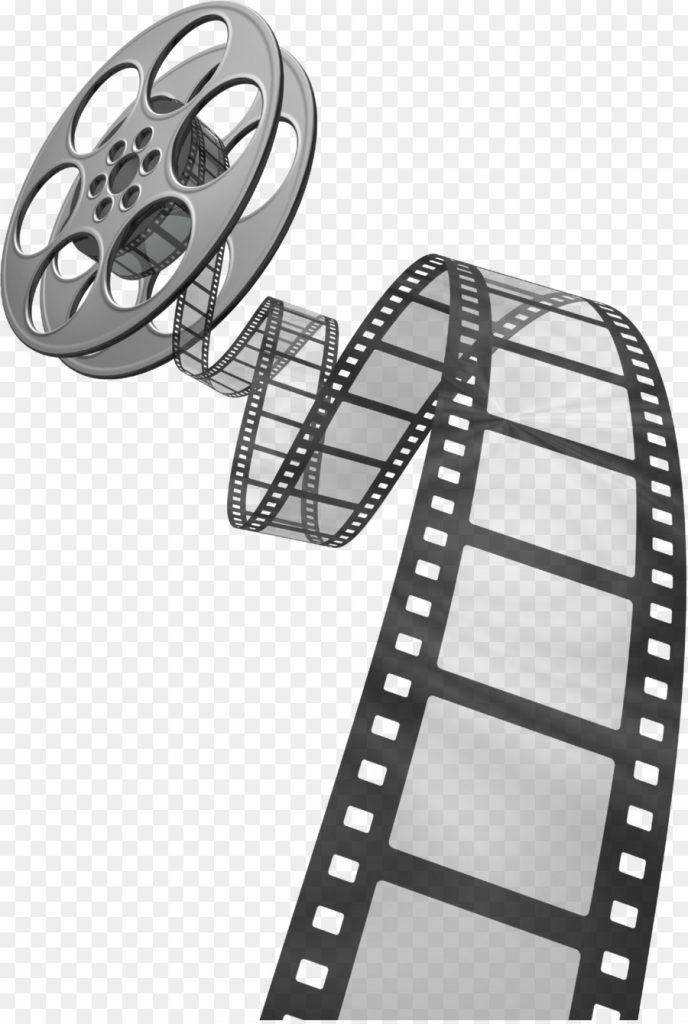
If we were to have a map of cultural evolution, then we would first be challenged to explain it, then provide a mechanism by which such patterns emerge. For biological evolution, the gene is such a mechanism. The phylogenetic tree-of-life depicts how life on earth emerged. It is also a representation of the relationships between gene sequences, as genes provide the pattern of descent and therefore the tree structure according to expressed traits. Employing Dawkins’ gene-meme analogy, then cultural object inherit patterns of memes with variation. Modern zombie narratives inherit the memes of flesh-eating mindless individuals, but with a switch in memetic locus to a more contemporary explanation: they are not demon possessed, but victims of a neuro-parasite epidemic. Cultural objects then would have a mappable “memome”, or meme-plex, each clion (or species of cultural item such as: car production model, dance move, cinema release, language dialect, etc.) has a distinct meme sequence of information that is expressed as traits of that object’s cultural form (for celluloid film, these as cells that contain each frame, the sprocket-holes might be considered as being a bit like the sugar-phosphor backbone of DNA). This memetic analogy to the “genome” would enable such as organisational structures, products, attitudes and preferences, markets, technology, fashion, and religious and economic behaviour to be sequenced according to their memes, and the distances between specific meme sequences would provide our metrics. From the measurable distances between clia (classes of cultural objects), we can construct a cultural phylomemetic tree or cliogram. Hence, a cliogram depicts patterns of memetic development representing cultural natural history. We might be amused then by this offering as a most literal and complete museum catalogue.
Wikipedia say: Clio, sometimes referred to as “the Proclaimer”, is often represented with an open parchment scroll, a book, or a set of tablets. The name is etymologically derived from the Greek root κλέω/κλείω (meaning “to recount,” “to make famous,” or “to celebrate”).
What might be in the book that Clio holds? In her hands is a complete list of historical achievements, past, present, and those to come. It is an account of cultural diversity of events, actions, and artifacts; the equivalent of a genomic encyclopedic volume of all real and potential cultural objects. It presents entries on social structures, organisations, institutions, and the rise and fall of empires and civilisations; of war and peace, crime and punishment; of religion, law, science, medicine, and discovery; of trends, fashion, merchandise and merchants; of tools, techniques, technologies, engineering achievement and failures; of the shifting sands of attitudes and preferences. A cliogram then is an effort to replicate her Olympian document in digital form.
Futurology: Eka-strategems and finding the gaps in the map
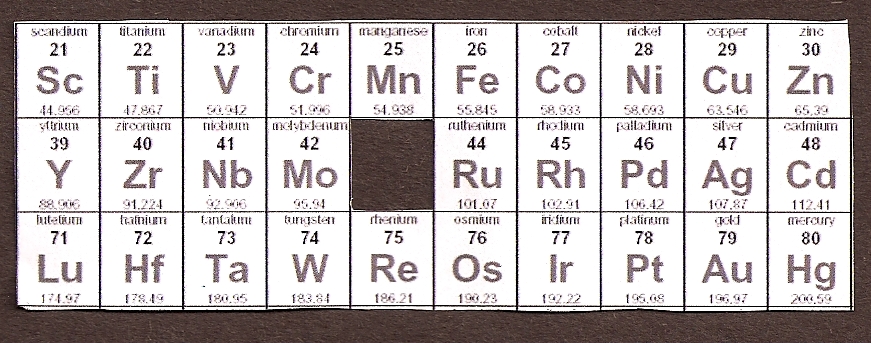
The muses ’embody the arts and inspire creation with their grace’: They are a source of innovation, not just of things gone, but also of things yet to come. Understanding the mechanisms and processes of cultural evolution, as depicted in a cliogram offers a historical explanation of how culture arose. By understanding the general underlying dynamics, it tells us of the ongoing evolutionary processes which are happening currently, and will continue into the future. Biological life will continue to evolve and human technology will continue to progress, even if we can’t forsee the precise details. For biology, there are huge potential gaps in diversity that nature did not explore: branches cut off by the fate of extinction. Mythology conjured up numerous kinds of hybrid beasts: unicorns, gryphons, dragons, mermaids, centaurs. While many might not be viable, such as a flying horse as its wings are too small, some just did not occur because that line was ill-fated according to natural selection, but were at least viable as lifeforms. The potential combinations of DNA were there but the lineage got broken. When Mendeleev pondered on ordering elements according to atomic structure, he found various positions in his table that were not occupied by existing substances. He called these “eka-elements”. Chemists have subsequently discovered that these empty positions do have entries, however rare the occurrence is in nature owing to radioactive decay. Particle physicists have even managed to create most of the missing and unstable isotopes, albeit for fractions of a second. This is an example of theoretical phase space giving rise to exploration and discovery. Of the vast potential combinatorial phase space of DNA, comparatively few viable possibilities have ever been expressed, but we can posit, like mythologies, that there are eco-positions of weird and wonderful species. Looking at the tree of diversity, we can discern where phylogenetic branches that were hacked off, or emerging buds that may yet sprout. For culture, similarly, a cliogram would show lines of development that were not persued, but could have been: Betamax vs VHS, motor-powered penny-farthings, a commercial flying bedstead.
From the potential phase spaces, we should see yawning gaps-in-the-map of cultural dead ends, killed off by rival ideas, and never revisited: counterfactualism and historical “what if?” Indeed, Flynn’s Babbage society is an example of a counterfactual thought experiment expressed through science-fiction, whereby he explores what might have happened if the difference engine had have worked.
With synthetic biology, it is becoming possible to engineer chimaera, genetically modified organisms (GMO) that are feasible but never emerged through natural selection alone. With DNA technology, biologists can tinker with genetics to produce transgenic life-forms that are unlikely to emerge naturally. They can experiment with such theoretically possible eka-combinations in genetic phase-space such as a goat that produces spider silk proteins in its milk. Again, science-fiction has contemplated the possibilities, ethics, and dangers of more extreme modification.
Persuing the analogue of genetic engineering with regard to memes, we are familiar with sticking ideas together to come up with new assemblies. The arts and humanities have unrestricted poiesis, and storytelling is a prime example. Tales never loose in their telling. Rather, and as with the fisherman’s tale, there is a proclivity for exaggerating certain details, and embellishment and invention to make the story better. Iterated retelling and differential fitness between variants causes the better tail to spread at the expense of the weaker strains among wide-eyed listeners.
The methods of storytelling evolve also as technology progresses, and new media are drivers, for literally, literary adaptation. From the oral tradition of epic poems and stage plays, through film, and now interactive multimedia gaming. A narrative is said to be adapted is it adapts to delivery through the emerging media technology. The perennial zombie sub-genre is a case point from before Haitian folk-lore, through cinema, through modern viral explanations delivered through Netflix movies, and as a mainstay of first-person shoot-em-ups. Similarly, the Leprechaun emerged from Irish folklore, through the diaspora, to the perversion of the character with the shamrock hat and pipe.
We are seeing perhaps prehistoric mythology surviving using hybrids in their narrative phase space – the undying zombie trope ever relevant to TV executives and audiences as being Undead X Virus narratives, delivered digitally. Variations on a theme are permutations in the narrative, cultivated to be popular, and fed by the sales of commercial advertising space.
Science vs rainbows and unicorns
Lack of scientific rigour in the humanities is lamented not only by certain academics (Dennett, Wilson, etc) but also by practitioners. Dan Zarrella berates the lack of a solid marketing science:
If you’ve been to enough social media conferences, or read enough books or blogs about modern marketing, you’ve undoubtedly heard a ton of what I call unicorns-and-rainbows advice. Feel-good stuff like “engage in the conversation,” “hug your followers,” and “have a personality.” It’s hard to disagree with this kind of stuff, because I’m not going to get on stage and tell you to punch your customers in the face, but it’s generally not based on anything more substantial than what sounds right, or makes the listener feel good.
Unicorns-and-rainbows advice is kind of like the snake oil and magical cures peddled before the rise of real, scientific health care. No real doctor would treat his patients with a certain procedure simply because it “sounded right.” It’s time for social media marketing to move beyond the dark ages and embrace the deluge of data now available to us.
One of the biggest problems with the superstitious approach to social media is that success is considered luck. Under the hegemony of unicorns-and-rainbows, it’s black magic to make a piece of content “go viral.” The only things those myth-based marketers use to guide their efforts is gut feelings and anecdotal (and often misleading) “experience.”
He is right that the influence industry has persisted in spite of much-needed rigour. However, we might first think that the industry itself is a meme, and one premised on self-sustaining waffle that is immune to scientific infection, principally because a science of memes remains too elusive and immature to bridge the gap. The esteemed gurus of marketing preserve their positions and incomes.
David Ogilvy the famous ad man said ‘there is a disease called entertainment infecting our business’ pointing to the conflict of interest between ads that are creative for creativity’s sake at the expense of the promotional needs of the actual client. The unicorns-and-rainbows that Zarrella points to, is similarly diseased by self-interested memes that do little to get the sales job done.
It so happens, according to memetic theory, that such ecosystems are havens for “creative” memes and resist infiltration by “engineering” memes. Should the insurgent paradigm progress towards a maturity then, given improved fitness in terms of ROI for clients, they are likely to have an impact on the dominion of the incumbents. Scientifically engineered memes will fare better than unicorns-and-rainbows, but the engineering of memes is lagging for want of a good model.
Not ad-hoc LOLKraft
In that human languages and the communication of ideas predates writing then memes and culture predate history by a long way. Dennett points out that Darwin, in easing readers into his theory of evolution by natural selection, introduced the idea of unconscious selection, which has agency, but is not foresightful. Every one of us is involved in the ongoing cultivation of culture whether we are aware of our contribution or not. We do not need to know about meme theory to participate as much as animals breed, blissfully ignorant of their DNA. We just act naturally, accepting selected ideas, reconsidering them in the light of what we already know, and choosing to pass our thoughts onto others. Our entire involvement can be done without any meta-cognition whatsoever.
On the next level, and as was central to classical philosophy, was the citizens’ contribution to society. Here was a clear example of conscious and methodical cultural selection. Of course Plato could not have known how Dawkins would adapt the Greek term mimeme numerous centuries later, but might be considered to have been an early form of engineering of memes. Everyone does have a vested interest in shaping society, and everyone does do so to a more or less extent. When someone, such as a politician, develops a professional interest in steering society or influencing attitudes and is cognisant of their need to influence others, then they are engaged in conscious cultural selection in their policy decisions and sophistry. This level is the equivalent of selective breading, which essentially genetic engineering, but without having to regard or be aware of the molecular substrate.
Religion and politics are enduring examples of individuals and groups selecting and spreading ideas that shape culture. Jesus through his disciples, whatever else you believe, was clearly one of the most successful ever at saying “share this”.
The pinnacle of meme spreading, by its more familiar title, is advertising, with its related professions of PR, marketing, branding, and promotion. This became a force from the mid-19th century with the growth of consumerism, capitalism, and emerging media technologies of newsprint, cinema, radio, and later, television. People like Bernays were very conscious of what they were doing and the impact they were having on society and figured out methods of tailoring and delivering messages to meet the directions of their clients. Their intent was to steer attitudes, preferences, opinions, and values of their target audiences, shifting habits in consumption and brand loyalty. They were designing communicable ideas bent on changing culture. Bernays even called this ‘the Engineering of Consent’; a theme later taken up by Chomsky.
Modern marketing and advertising practices are well aware of their goals of shifting attitudes towards their client’s brands, be that manufactured products, services, political parties, and even religions. They know that they are influencing behaviour and steering culture. They employ our cultural icons as trend setters, they recognise the power of viral and word-of-mouth, they create buzz through social media and other technologies. In essence, they are manipulating the memes that underpin social behaviour, and some practitioners even recognise that they are involved in real-memetik.
Techniques for constructing and disseminating designer memes are very much in their infancy. Almost all of the selective meme breeding effort has been through trial and error, experience and intuition, and creative arts of mashing up ideas. The methodology has been that of craft and dark arts, rather than, by analogy, that of a scientific understanding of the ideological substrate and applied precision memetic engineering, and this has been sufficient so far. Those who have acknowledged the leap from craft cultivation to memetic engineering, such as Zarrella, are still labouring in a void of a solid memetic technology.
On the other hand, internet memes are flourishing in their new cyber-agar. The term “internet meme” is the equivalent of junk encoding DNA, which are propagated through social media, image boards, discussion forums, live-chat, and websites. They are typified by humorous image macros of cats with pithily stylised lolspeak annotations in the impact font: the LOL cat. The term is opposed to the more general but less apprehendable way that ideas propagate over the internet. Such internet memes are inexplicably popular, sticky and spreadable, and sporn a plethora of derivatives and snowclones: variations on the theme created by copying with modification.
In keeping with the theme, we might call the creation of such internet-memes as “LOLKraft” which, rather than demanding a deep understanding of culture or memetic, only requires an understanding of a particular in-joke, and the ability to use basic image editors or the rudimentary tools such as a meme generator. Web sites such as know your meme have been devoted to collecting and tracking such popularity of internet memes, and even spoofs of meme stock-exchanges NASDANQ and meme insider have sprung up.
Evidence-based decision support in a networked world
Perhaps the proliferation of fake news, tweeting, pornography and other trashy web stuff tells us more about the minds and maturity of the internet community, and human nature in general, than anything else. Junk encoding internet memes & lolkraft might humour such communities but have a minor influence in the global social picture. As the furore over Cambridge Analytica has shown, the internet does have a profound influence on society and that is an example of the web spilling over into real-memetik. That is to say that engineered digital-memes spread over the internet (other than annotated cat images) and can and do influence real culture outside of cyberspace. As our understanding of the underlying mechanisms of evolutionary models of information transmission (EMIT) develop, then so to will our ability for precision manipulation of digital-memes that we cast onto the net.
But the internet is just a convenient delivery medium and the flow of non-digital memes, off the net, will always hold an overwhelming influence. Our precision manipulation of digital memes will transfer over into real-memetik. Meme generators, along with AI will become able to construct and deliver PR, editorial, advertising and other propaganda, whether digital, traditional print, or word-of-mouth, with alarming accuracy and persuasion power. Technology will supercede LOLKraft; memetic engineering will supercede selective ideology breeding, and culture will succumb to intentional cliology. This holds promise but also a stern warning.
Behavioural economics, a kind of cliology by another name, has a focus on understanding and influencing markets, as of course has the profession of marketing. Thaler and Sunstein have recognised nudging is actually modelling with human decisions. The science, technology, engineering, and mathematics, and the art, humanities, and creativity of cliology debunks unicorns-and-rainbows superstition and provides the ability to push persuasion technology way over the red-line.
Applied cliology
Ideally, there should be an on-going dialogue between cliology and cultural evolution, whereby the academics use the tools and data to assess their theories, and the practitioners attempt to apply the theories for beneficial ends. While cliology embraces theory, its focus is on application; not primarily of understanding, but of instrumentation of social and cultural intervention and of building a better world. More will be said on this, but to provide an outline here, typical users could range from on-line marketing to government policy-making, to communities striving to solve problems and implement change. Amazon, Netflix and others, are well known for their data collection and precision targeting of their sales communications: they have become quite adept at understanding consumer preferences and influencing purchasing decisions.
Applied cultural evolution
Cultural evolutionary theory studies; applied cultural evolution seeks to deliver cultural health and fitness (in the Darwinian sense) to communities large and small. The Center for Applied Cultural Evolution states:
The Center for Applied Cultural Evolution has the mission to apply insights from cultural evolutionary studies to pressing social problems affecting human communities around the world. We provide a bridge between researchers who study cultural change from diverse disciplinary backgrounds and practitioners seeking to guide the evolution of their communities to address chronic problems that impact the people living within them.
It has much in common with behavioural economics, functional contextualism and cliology.
Among the fields, we employ for our work are behavioural science, cultural anthropology, prevention science, public health, complexity research, and evolutionary studies. We take a problem-based approach that blurs disciplinary boundaries by drawing broadly from the social and environmental sciences to explore all relevant aspects of problems as they exist in the world. This gets deployed as location-based solutions that help communities become more healthy and resilient through the convergence of public policy, social innovation, and design science.
In a slight difference to cliology, applied cultural evolution focuses on solving real-world problems for communities and has implicit ethical v-memes. While cliology is built for practice, it has a remit that is more technical. Although community health might be one application of cliology, is not specifically dedicated to that. Its alignment is necessarily neutral and acknowledges that it carries, along with its aspiration to do good, a potential for misuse by nasty corporations and governments. However, the tools and methods that cliology supplies are perfectly suited to furthering the goals of applied cultural evolution.
A roadmap for cliotechnology.
The essence of cliology is that of a cybernetic system of input, process, output and feedback. this systems view is applicable to both theoretical and applicative sides. Again, cliology is not just an academic study that discovers the laws of cultural dynamics, it is intended also as an engineering discipline that exploits those dynamics for practical purposes. Digital information technology, information systems and the web are facilitators for capturing, processing, producing, disseminating, and monitoring the influence of designer memes: an umbrella term would suitably call this “cliotechnology”.
A cliotechnology-roadmap is needed to chart out the course of development needed to move out of unicorn-and-rainbows superstition, and towards a rigorous methodology of cultural engineering. The deliverables will mostly be presented in software form as tools for clioanalysis and cliosynthesis.
- The analytical tools will allow views of real and internet memes. They will be able to spider and scrape culture on and off the web, identify and name them, re-construct their interrelationships, and present data visualisations for the users. The tools will thereby provide a picture of culture.
- Synthesis tools will emerge for foraging, scooping, and cleaving meme fragments, recombining them into novel forms, simulating their effects, and allow delivery to target audiences.
- The iteration between analysis and synthesis will enable and monitoring, and maintenance of designer memes within culture.
A technology roadmap (TRM) is a planning tool that operates at a wide scope. Rather than project management tools and software development methodologies, a TRM is concerned not with the development of a specific system or project, but the long-range strategic interlinking of forecasted emerging technologies in anticipation of their emergence and maturation. Technology readiness level (TRL) indicates the maturity of an emerging technology, tracking its progress through a series of levels.
The cliotechnology roadmap remains to be fleshed out. Most of this is currently at a conceptual or at a “breadboard” TRL. However this site covers some candidate core models, such as the noam and clion, the basic clionomic method and analytical software (MENDEL), and conceptual ideas for cliosynthesis that can be added to the development pipeline. The current experimental projects have been prioritised as they are the platforms for clioanalysis upon which envisaged developments rest. Indeed, cliotechnology in a self-referential mood, is a tool for forecasting and technology road mapping. It is very much in a “bootstrapping” phase currently; eventually, software that automatically charts potential cliotechnological trajectories is aspired to. An example of forecasted integration is that of “deep learning”, a neural network-based approach that is suited to classification. Another is that of using VR for data-visualisation. Deep learning and VR are entering into the consumer market with such as Oculus and NVIDIA bringing their product to the hobbyist. Accessibility is important for cliology as it will be a crowdsourced effort; an open-sourced approach will encourage a more diverse range of disciplines and researchers to get value from participating.
Where this is leading
Whole volumes of waffle could and have been written on what we should and should not do; of freedom and dignity. Given the discussion on the distinction between cliology and applied cultural evolution (and other means of social management), a brief, all too brief, account of the ethical stance is demanded here.
The thought experiments of speculative science-fiction are insightful. In Flynn’s In The Country of the Blind tackled many of the intricate issues, and cautionary tails head on. The big take away is that we are all amateur cliologists!
There is an inevitability to certain technologies emerging at some point, whether they are given assisting nudges or even attempts at suppression. Cliology by any other name is coming, whether we like it or not. Variants on the theme have found their way into speculative science fiction: thought experiments that extrapolate technological trajectories into narrative; and real management fields like behavioural economics. Cliology is just a convenient name for the systematisation of principles that have been around since the dawn of civilisation. These principles are gaining academic and scientific attention now, which will transcend into solid engineering models and technologies now that the fouth industrial revolution is upon us.
Firstly, there is a division between those who engage in emotionally detached study and those who intervene, or perhaps interfere. The extreme case of learning about history without learning from it, where political historians study world leaders, but sadly that is as far as it goes.
There is a strict and necessary partition between the instrument of cliology, and its field of application, between the toolmaker and tool, and tool user and use. The tool maker may have an intention in mind when making the tool and may use their own tools, but that does not guarantee the intentions of other users and their uses of the tool. The tool in itself can have no ethical stance, it is just a tool, and the intentions of the tool user, where ethics do might come into play, are really none of the toolmakers business. I have elected to reduce incidences of the first person pronoun in these main pages to minimise inevitable contamination from my own views; they are restricted to the blog.
Pretty much any technology can be abused, some more than others. The sharp edge of a scalpel becomes the proverbial double-edged sword – the instrument ethical neutrality in itself, whether to heal or harm is down to the wielder. Nuclear bombs, on the other hand, could cause extinction or could deflect rogue asteroids thus preventing extinction.
Cliology in itself is an instrument, or moreover like a coding language: a tool for building tools. It would not be right for the World Wide Web Consortium (W3C) to impose what we are and are not allowed to build in HTML, even if some people do find certain websites repugnant (no links needed).

Of course, social control is a moral minefield, fitted with peat bogs, and snake pits and bear traps and banana skins. Even deliberate and careful attempts at building paradise risk degenerating into dystopia – the manipulation and misuse of others for the gain of an elite. Perhaps, to stoke paranoia, this is happening anyway; secret cabals; shadowy government programmes; Dr. Evil and other megalomaniacs. Fiction is replete: Orwellian new-speak nightmare, or Huxley’s neo-pavlovian nurseries; or to fact, Chomsky’s critique of Skinner; or Berneys, or Postman, or even Ogilvy’s commandments for building advertising campaigns.
Is cliology about lofty utopian fantasies, applying cultural evolution to human well being, saving the planet, or just selling more widgets? Cliology is just a tool: a meme, and from a meme’s eye view, such things do not matter. Memes, like viruses, have no intent, they are just good at spreading. But memes roam in packs, or co-adapted meme complexes , memeplexes as Blackmore calls them. Viewing them as from the perspective of the meta-meme gives us (or at least the other memes within us) a handle. Dawkins, Dennett, and others have popularised Axelrod’s Evolution of Cooperation (EOC) with regards to memes. Boiled down this says that co-operation increases the fitness of the participants, but neither intelligence nor foresight are necessary. Human altruism helps to perpetuate the species. Memes club together to form combinations that help them spread better, which is “good” for each individual meme. Indeed, the concepts of altruism, and EOC are also memes, and other memes that join forces with them gather a certain mutual advantage. It is then that a group of memes that are good for the species can become more prolific because the continuation of species, in return is good for them.
Not all memes are of the same order, there are memes that act as gatekeepers for other memes, allowing or denying them entry. These gatekeepers are epistemological – epistememes. Examples are found in dogmatic theology, but also in philosophy, such as scepticism, and Max Moore’s Pan Critical Rationalism. Cliology itself is possibly of this order. With education (in its original sense), mindfulness, criticism, and even some forms of therapy we can innoculate our minds against parasitic infection. We can spread pro-biotic vaccine memes that ward off dysbiosis. A cheesy slogan will suffice for now: ‘with great power comes great responsibility’.
Cliology is just another meme, but a special case as it is dynamite, and although a bit mixed, that metaphor is apt. The concept of “Nobelisation” will be detailed elsewhere, but basically means shipping designer memes as a memeplex alongside cooperative, altruistic partners. Perhaps the closest ideological packaging would be libertarian paternalism, drawn from behavioural economics, and featured in Nudge (Thaler and Sunstein).
However, cliology remains a neutral tool; an instrument, which is intended to be used by others. It is not for the tool itself, but down to the practitioners, including those afore mentioned applied cultural evolutionists, to figure what might be a “good” culture.
The future of futurology
Memetics has a self-awareness. The idea of the meme is itself recognised as only another meme: called the meta-meme. Cliology too, has a kind of self-awareness. It identifies itself as a cultural object, a technology, one that is predisposed to forecasting and influencing culture. In that sense, it considers its own development and evolution. Moreover, it allows strategic foresight and influence over its own career path. As cliology is in its speculative stages, extrapolating and adheriting and absorbing other ideas, then its first baby steps are not certain. However, given the speculation over a cliotechnological road-map (and present developments), then clioanalytical and cliosyntheic software applications will be first off the conveyer belt.
If this were to occur, then such software then would be applied to specific widgets and policies, but also importantly to charting the next stage of cliology’s roadmap, and driving that impetus. A long-term projection would invite a sort of Moore’s law, a technology feedback loop where IT of ever-increasing complexity is applied to building IT of ever-increasing complexity, and at an ever accelerating pace. The details are, by definition, unknown, but it is possible to guess at a series of evolutionary transitions both of cliology and its translation into cultural evolution. Perhaps we are blind to the future currently, but in our mind’s eye, we imagine a future where we can see the future clearly.