[TBA completion 2018-10-16]
Clionomy, cliology, and cliometrics are about meddling with meta-history. They propose a science of social influence, not only of history from a scientific point of view but also of a projection in terms of engineering the future. It is a scientific futurology based on understanding events, and how they occur and projecting those dynamics to guide for future outcomes, by anticipating how things may go. Clionomy isn’t so much a new subject, rather, it is a cluster of existing themes that demanded a new name. An overview of the scope of Clionomy is illustrated here.

Clio was, and still is, the muse of history, or fame. Cliology is the widest most general aspect: as an “-ology“: the logical study of fame and history. There are many more post-fixes to The “clio-” prefix that can be attributed with meaning (eg. “-metrics” is about measuring and finding causal correlations between identified components); these might be called clionyms, and “clion” will be ascribed to the fundamental unit of such study. Clionomy, (ie. the “-onomy” variant) is concerned with identifying, naming and arranging the cultural components, (artefacts, organisations, social norms and taboos, collective behaviours) systematically – creating a map of culture. Linnaean taxonomy is central to the effort.
In difference to conventional commentary on society and culture, cliology and associated themes are inspired by natural life-science and are extensions to biological patterns. They are a necessary step-on from descriptive study towards a science and engineering that use adopted and adapted rigorous methodology. This proposed scientific orientation to culture is aimed at a range of audiences, but two stand out in particular. Firstly, academics of cultural evolution and society who might find explanatory power in the lexicon. Secondly, practitioners who want to do something with it, who want more rigorous backing and tooling to their socio-cultural interventions based on evidence, such might be influencers: policy makers, and prophets, and managers, and consultants.
The aspiration, and drive for identifying, naming, and arranging cultural components, is practical: to create tools and techniques for analysis, forecasting, and intervention, along with methods and software, and datasets for predicting and steering towards the outcomes of our choice, and decision support in evaluating what action best supports our cause.
Clionomy as a support for a theory of Cultural Evolution
A current problem with the area of cultural understanding, and particularly with memetics, is that there are significant volumes of waffle of varying qualities, but not many empirical studies to back them up. Part of the problem is that there are no big-data sets, nor any established methods, nor for that matter any common naming conventions. For cultural entities, there is nothing even approaching Linnaean Systematics or data, used in biological classification. At best, there are descriptions and commentary and cultural items have vernacular labels and are lazily lumped into categories or folksonomies; these do not lend themselves to the development of a science of culture.
But what if a kind of Linnaean Systematics could be borrowed from biology and applied to culture. A system whereby ideally, all cultural entities could be identified uniquely by their morphology and underlying meme-patterns. From behaviour to routines and competences, manufactured goods, infrastructures, policies, organisational structures: anything that is made by, used, and shared among humans? This would have some resemblance to the tree-of-life and would classify cultural objects into a divergent hierarchy according to form: an evolutionary tree of culture. The system would allow all other cultural objects to be added, named and arranged in an alpha taxonomy. Moreover, and as with the tree-of-life, we could begin to infer how such a pattern arose, a natural order of artefacts coming from the processes of cultural evolution: variation, selection and retention. This would indicate a cultural cladistics, a pattern of descent, from which we might propose scenarios that reveal the underlying cultural developmental mechanisms. For a theory of cultural evolution, such a schema would be supportive.

But what about practice then? Almost all human activity involves interacting and meddling with culture in some way. Our whole economy and livelihoods depend on modern culture and its dynamics. Innovation, knowledge transfer, product development, manufacturing, marketing, and logistics; consumer preferences are essentially cultural and can be located on the map – this is the essence of marketing anyway. But gaps in the market and knowledge do exist, and our cultural evolution and commercial and wider economic successes depend on their exploration and exploitation. A lot of this discovery is a dark-art, a process of trial and error, of chance and necessity, a craft. But what if a relevantly detailed, accurate, and comprehensive map of culture could be provided? Then the glaring white space of virgin territory would become apparent and invite colonisation. Further, such a map would show us where we are now and how to get to where we want to be.
To this end, cliology has an eclectic background and is a mash-up of components drawn from a spectrum of academic and practical disciplines of science, philosophy, mathematics, engineering, humanities and arts. It embraces primarily biology, sociology, psychology with history, and economics (and their combinations such as social psychology, evolutionary psychology, socio-biology, behavioural economics, economic history), anthropology, archeology, linguistics, jurisprudence, computer science, argumentation, functional contextual behavioural science, and integrates just about any study other human activity however esoteric. A science of history and fame and culture is not intended to compete with pre-existing disciplines. Rather, it aims both to integrate thereby consolidating aspects from this background, while teasing out its own specific the puzzles that the established fields tend not to touch, or otherwise provide scientific treatment. As a consequence then, cliology does have its own unique line of inquiry, that of a natural life-science of culture that can be extrapolated into the future but also seeks to inform existing lines of research, and complement theories around cultural evolution. But the corollary of theory is practice and, just as medical science can lead to better clinical intervention, the ultimate prize of cliology is conferring utility. A dreamy utopianism were one to think that way. In relation, clionomy is the instrument, the chart, the plan, by which the dream can be realised.
The history & meta-history of clionomy recapitulated
Haeckel stated that ‘ontogeny recapitulated phylogeny’. He was the guy who illustrated Darwin’s ideas as a tree, but also saw embryological development as following the same progression as more complex species development. This view is somewhat discredited as an explanation although the pattern is still there. Cultural Study, as a field of the humanities, emerged separately to the sciences and has traditionally not been science-oriented, but rather descriptive and commentative. This does not mean that scientific approaches are prohibited, but rather scholars of arts and culture are not inclined to view their objects of study from a scientific perspective.

A few enclaves studying the “science of art” and art of science have popped up here and there, but have been more of a left-field curiosity, a no-mans land of gentleman scientists on the fringe, and have not emerged as a mature discipline in its own right. Consilience between the arts and sciences is on its way, and rigorous approaches to culture are started to be taken seriously now. Cultural evolution, as a naturalistic view of culture based on human evolution, is gaining some traction and interest from scholars.
The Haeckelian bridge of isomorphism
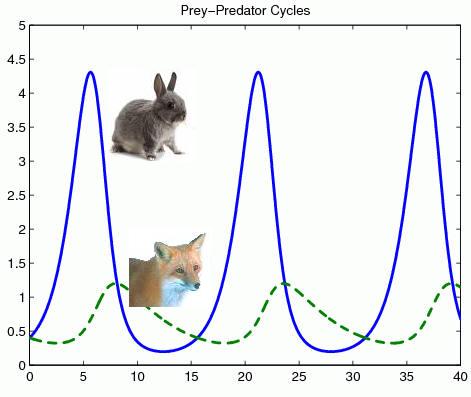
In positing that ‘ontogeny recapitulates phylogeny’, we can consider culture as possessing life-like dynamics, and further consider that a life-like cultural theory would reflectively apply life-like dynamics to itself. The ontogeny of such a cultural theory, emerging, inspired & inheriting from biology, would likely recapitulate its phylogeny and bear a resemblance in terms of its ancestral methods and principles. That is, a life-science approach to culture would likely take on the traits of biology, such as evolutionary thinking, along with similar patterns of developmental stages of its ancestral biological field. We can envisage mechanisms of variation, selection, reproduction, replicators, differential fitness, population cycles and so on, inherent in cultural objects and processes, and examine them from this scientifically reductive view. More generally, we can take this view of life: whole tracts of biological theory, and attempt to see how they fit with this view of culture. We can propose a hypothetical isomorphism between science and culture, then apply rigorous scientific methodology to spot and eliminate misfits as an act of consilience. Our theory evolves and becomes more refined based on evidence in a sort of subtractive synthesis. This initial proposal of isomorphism that facilitates methodology, we might call the Darwin’s Bridge, or herein, the Haeckalian Bridge, forms isthmus of consilience between the humanities and culture that promises, or threatens, a great exchange of ideas.
How does clionomy offer to fill that gap
Leonardo da Vinci told us to understand the “art of science” and the “science of art”. A great exchange of memes would impart both. For an art of science would liberate ideas from tight disciplinary straightjackets, forging creativity and novelty seeking in the sciences, particularly trying out inspiring ideas and methodologies that do not adhere to academic territorial dogma and locked in traditions. Interdisciplinary materials have always been on the fringes, stepping out of a norm where the rule is to play it safe. But a risk avoidant academic culture of prestige publications, tenure, preserves the status quo and inhibits intellectual exploration and impedes scientific discovery. OK, very established fields may have strict research protocols: human medical trials demand such, but the process of science necessitates stepping into the uncertain and the unknown as it generates variation. We need to envisage this unknown, through hunches, intuition, invention, hypothesis, imagination, dreams, and wild guesses to provide the impetus for proper discovery.
On the other hand, the “science of art” is about applying rigour to the softer fields of human interest that the harder methodologies have traditionally neglected. Cultural study is essentially descriptive, or commentative with the epitome being Sunday newspaper supplements. It does not seek mechanistic laws of how culture develops, considering such to be reductionistic. Teasing out such patterns is hard work in such an abstract unconstrained shape-shifting area. For physics, the world is much more tangible. However, just because it is hard work and not in keeping with tradition, that does not mean to say natural patterns don’t exist. Humans evolved; human culture is a spin-off of that. That the humanities are an extension of biology suggests that some aspects are amenable to empiricism. And as curious humans, we are invited to probe the underlying mechanisms that drive our extended, or maybe distended, phenotype.
In between science and art is the “no man’s land” still. A few intrepid souls have ventured into here, but there is a lack of safety and chance of easy attack from both sides of orthodoxy. It remains largely unexplored both in content and method, caused largely by a lack of will and established method. Each side is comparatively well mapped out, while the in-between lacks exploration. There is a significant gap-in-the-map making its traversal difficult and precarious.
The point of clionomy is to set-out an expedition into that zone. To take our surveying methods and chart out what is there, and form a bridge between the two great endeavours of inquiry. To inspire consilience using a combination of both creative expression and rigorous method. This will provide a Haeckalian bridge, an isthmus for which the great exchange of ideas to take place. In the first instance, a mapping method is required that considers cultural objects from an evolutionary angle. Reappropriating the mood that ‘ontology recapitulates phylogeny’ to the development of mapping such fields, then the ontology of cultural science may recapitulate the phylogeny of life-science. There is no more a fine-grained and mature mapping tool than that inspired by biological evolution: systematics. Systematics emerged in biology, but is not limited to such. It has more general application. Systematics then would give us the rigour to identify and arrange the objects of culture and provide us with a basis for a scientific inquiry into what has previously been off limits. An analogue, or reapplication of domain, of Linnaean systematics, then would be the foundation of clionomy.
Specific properties of cliolonomy

What is in a name?
Clio was the Greek muse of history and fame; as a prefix “clio-” honours her. Clionomy appends the “-nomy” postfix whereby nome relates to naming (the idea of a “noam”, a variant on this, will be introduced in the section on memetics), or more importantly, laws – the natural laws of process by which history or fame arise, as opposed to the recording, discovery, and documenting which is the content of the subject of history. Clionyms are these names. Scientific metrics, require some solid and definitive object of study: Linnaeus named (binomens) and arranged biotic (and mineral) species into a tree-like hierarchy. A systematic view of culture would likewise benefit from some better identifiable object. As contrived terms go, the “clion” has potential which stands for “Cultural Linnaean Information Object Noam”, and each clion should be assigned a unique clionym. This term insinuates that items under study are information objects (an informatic bias); the Linnaean refers to an approach to taxonomy, and boam gives us reference to a model for naming and laws (and additionally pays homage to Chomsky). While the term clion is a shorthand for any cultural item or trait amenable to taxonomy and other rigorous treatments, it also promotes a sense of being a unit of study of our chosen scope, like a taxon, or phenon.
Of methodology and mathematics
Systematics is proposed as a basic mapping tool for culture, with a thought that it can provide insight into an evolutionary perspective. It is envisaged that more advanced approaches can then be adopted, such as cladistics or numerical taxonomy (phenetics), which might reveal patterns of descent and inheritance among the cultural diversity. We can then draw other hypotheses across the Haeckelian bridge for evaluation, such as an analogue of a genetic replicator applicable to culture. The meme seems to serve that purpose well and offers us models of evolutionary information transmission through real and cyber society. Other modelling methods might provide us with a symbolic system for encoding such processes of transfer. Toulmin’s analysis of argumentation, augmented by the language of logic and predicate calculus (among others) will enable the notation of memes and rule-governed behaviour (relational frame theory) that they engender.
Aspirations
Clionomy and its related themes, interface with the engineering imperative. That is, they are not just theoretical concerns, but cycle between theory and practice. Of importance is that they are applicable to real-world problems and can confer deliverables as explanatory tools, applied research methods, commercial techniques, technologies, databases, and software. The notion of the clion is proposed as the foundation for re-applying Linnaean systematics to cultural objects. This is not just a paper-based pass-time as modern digital information systems allow for big-data processing. Hence, one grand aspiration of clionomy is the identification, naming and arranging of all cultural objects across all of history. An immediate deliverable of clionomy then is a “clionomy” (as output of the process of taxonomy is a taxonomy) which provides a tree of “clia” (OK, I know!), and an open system for ongoing classification effort. Linnaeus managed a Herculean feat, but his baton is still being carried three centuries later. Under the further assumption of cultural evolution, and the metaphor of the meme, then such a clionomy can attract a cladistic interpretation: we can infer patterns of descent, variation, and selection, and the factors contributing to cultural evolutionary scenarios. We can determine the underlying memes and their population determinants. We can explain why fame, fashion, fads, technologies, markets and other dynamic aspects of culture occur, and critically, perhaps garner some small forecast into the direction of culture’s evolutionary arrow, and even re-aim it.
The implications of clionomy
Academic cultural evolutionary theory
Ideally, there is a cyclic interrelationship between theory and practice; between science and engineering, whereby academia formulate ideas for the practitioners to use, and practitioners raise puzzles for academics to answer. This would be true for cultural evolutionary theorists and clionomists. Self-referentially, clionomy would ask what the state fo the field of cultural evolution; moreover what are the important gaps in knowledge and research and how the field might get to those answers.
For cultural evolutionary theorists, having some fixity of the objects of study through a standardised method of identifying cultural objects would enable greater scientific rigour, perhaps heading towards that of the level n biology. In building an open and extendable alpha-taxonomy of all cultural objects: present, past, and future we would gather a large data set of comparable items such that we can see the relationships, between. From this data set, we can attempt to infer causation – a beta-taxonomy of descent of ideas/memes/cultural traits, and postulate evolutionary scenarios for the emergence of cultures. Cliology then would assist in fleshing out the data needed for a science of cultural evolution, and begin to answer some of the questions empirically.
The practical applications
Outside of academic analysis of the origins of culture, cliology aspires to offer practical gains: clionomy is the fundamental tool for attaining them. In the most direct application, a clionomic map of historical and contemporary cultural objects allows us to conjecture the underlying historical dynamic that gave rise to the current structures. With this then, the next move would be to extrapolate from the current structures, using our knowledge of the dynamics, to forecast how future structures might look. We might be testing hypotheses, but more practically, we are forcasting the future waves of culture. We can predict likely trends ahead of time a little better than guesswork, or at least our guesses become a little more educated. In investment circles, futures are big business, and although risky, tend to yield a greater payoff. Oracular vision, through the clear lense of cliology, would serve to mitigate the inherent risk of leveraging.
Moreover, each and every one of us contributes in some way to shaping the future and carry an innate vested self-interest, however mutual, whatever our degree of influence. For the want of a chart, we often navigate blindly. But were we to garner some insight into the consequences of our actions, then that might inspire us to make better choices. Clionomy thereby confers a chart; it reveals the options available and provides a better indication of the consequences of our actions. Clionomy gives us a choice architecture by which we can meddle with slightly greater precision. Now, there are those who stand to benefit by, not just forecasting trends, but influencing those trends, and this is where clionomy reaches real pay-dirt. The list of players is long, but the general categories may consist of the following.
- Product development: two themes stand out. Firstly, that of spotting novel exploitable product variants that might not have been identified conventionally. Secondly, innovative manufacturing techniques might become available. Gaps in the map are likely to yield virgin territory.
- Marketing, advertising, PR and sales: marketing is interested in exploring new commercial niches and establishing consumer preferences. Advertising and PR are concerned with steering those preferences. Again cliography is likely to reveal unexplored terrain, but a memetic understanding of influence would allow preferences to be altered.
- Military: Psyops is fairly well established. However, the application of memetics to strategic communication may act as a pacific weapon of cultural influence. For example, releasing a specific inoculation against memes of radicalisation may temper the recruitment into violent extremism. Further, the ability to monitor cultural shift may provide early warnings against outbreaks of terrorist memes.
- Policymaking and decision support: As a strategic tool, cliology might be applied to business and public policy making by teasing out the lesser known options. From there, decisions may be assisted by simulating the impact on the target culture which would include acceptance (or resistance) to the meme being introduced, along with strategies for its promulgation.
Speculative clionomic instruments
As with most modern things, its all done with software: the algorithms involved are hair-raisingly complicated and totally impractical using pencil and paper. Firstly, the logical scope of the data-set is huge, as it demands a data-point of every feature of every artefact ever build, or likely to be built. Data collection needs either to be mined or crowdsourced. Secondly, calculation involves significant algorithmic complexity and much parallel distributed processing. However, an outline of the entirely speculative types of software tools can be envisaged.
Like cartography, cliography would suggest the production of usable cultural maps derived from clionomic effort, and would be used for cliological purposes. The informatic view of culture sees it as culture as a kind of social-software. Software engineering methodologies are readily available as templates of sequential developmental stages that might be adapted for purpose. Candidates for meme mapping and building such applied social software then might.
- Orientation: knowing how things are now and how they got to be that way. Knowing the lay of the land would point to strategic opportunities as the basis for decision making.
- Forecasting: projecting from the current situation, applying knowledge of cultural dynamics, to estimating the future course of culture, including the likely actions of other players.
- Decision support: a forecast would provide a wide range of outcomes and their likelihood, some of which are more preferable than others. Simulation would help assess the impact or disruption of any intervention against non-intervention. Other factors such as cost and difficulty of diffusion might be taken into account in selection from the presented options.
- Design: cultural design is built on specifying the underlying memetic code. Reuse of existing meme components, live or dormant, by recombining them into novel arrangements is a possibility. Again, simulation would be indicative of effective and danq options along with which audience to target.
- Intervention: the spreading of memes and their triggers to target audiences.
- Monitoring: ongoing orientation would demonstrate whether interventions were effective, and would provide feedback for adjustment.
- Maintenance: ongoing intervention would be based on redesign according to monitoring, and will account for changes in strategy.
This would require software (MENDEL) for analysing the database (memeBase), along with data-visualisation methods on human-computer interfaces. Much could be made of VR and AR here in helping users to understand the structure of culture and its dynamics.
For those who are looking for novel opportunities, or gaps in the market, then software for teasing out eka-clia: new strategies, new products, new markets, new promotions, would be beneficial. These would not only find the gaps-in-the-map, but also be able to perform PEST analysis by simulating future impact and disruption of introducing new memetic items into the cultural eco-system. These systems would also assist decision support in terms of assessing cost-benefit analysis (COBRA), and how to ensure that the introduced memes are viable. Here, RME might employ scooping the meme pool, splicing meme fragments, simulating their danqness, and suggesting effective vectors into the market demographic (or deme). For monitoring, meme flight tracking systems (TRIPWIRE) would be able to determine infection of the targeted deme, their effects, and the level of competition. Finally, cultural feedback would help nudge the targeted deme’s preferences using the Bernaysian Cliostat.
Thought experiment case study
A thought experiment on how clionomic instruments might be used in practice might be illustrative. Perhaps an organisation attempting to envisage a technology roadmap for their product design cadence and markets and strategy might present the “bulls-eye” user of such methods in a speculative case study. Along with the general pattern, let us also, in the spirit of the futurology of futurology, consider how cliology, as a product in itself, might propagate to one of its potential user bases of manufacturing industry. Of course, this can only be done properly once the tools of cliology have been implemented, but the general idea can be outlined here.
Firstly, cultural orientation would establish their present location on the cultural map, in terms of what market they are in, and what demographic their products are catering to. On the cliogram, they would be able to pinpoint their position in relation to those around them, both nearby competitors in their market, and out-group more distant markets. From the portraits of their features and attributes across a range of parameters, such as their deliverable products, strategies, structures, routines & competencies and so on, an analyst should be able to compare and contrast traits to find a metric and see exactly what does and does not differentiate them from the others.
From this snapshot, and with insight into the historical dynamics of that market, then the analyst would have some ability to forecast the direction of the market. This, along with other marketing methods would give some anticipation of changing consumer preferences, competitor developments, and the likelihood of new entrants, and probable PEST changes.
Using data visualisation, the cliogram, and other tools would reveal potential unexplored demands, products, strategies, and organisational structures that would be cut-off from conventional business development. Many are likely to be inviable, but a few novel recombinations (eka-clia) might be feasible giving a technological roadmap to disruptive innovations that R&D could work with.
Taking the idea further, software should be able to simulate the effects of various scenarios on the market, and assist decision support in picking out the optimum solution. This would consider the product itself, but also promotional and branding strategies in accordance with envisaged preferences. It would also be able to simulate how introduction might alter consumer preferences and competitor response to market disruption.
From a marketing and PR perspective, it would be beneficial to influence those preferences and demands at certain critical times, likely in advance. Here, various mind-shaping options would become visible through the software, which could be simulated according to consumer historical dynamics, to determine optimum penetration, while ensuring competitor lockout (cf. Porter).
Finally, or perhaps an ongoing effort would gauge the effectiveness of the product and promotion. It would measure preference, along with other changing market variables, and be pro-active in maintaining market share through the delivery of timely strategic communication. This feedback mechanism would also indecate development, release, and PR cadences in order to maintain market leadership.
Obviously, such enablers would be beneficial in such a commercial environment, and industry is already striving for such.The other sectors listed in a previous section might have similar stories.
Such strategic information systems will never be perfect. However, with little additional foresight bestowed by cliotechnology, as the software implementation of clionomy, much of the craft, guesswork, trial & error, and dumb luck will be mitigated, endowing decision makers and choice architects with at least one eye.
[ideas dump]
[distinguish between cliology, clionomy, and memetics and put it all in the right place!]


Immediate & current development: the programme
tooling testing and iterations of theory and practice;
Intermediate development
inevitability of CE academia becoming applied engineering
ethics: wrong hands, and LP (cf nudge); weaponisation; instrumentalism, the dark side
early adopters: who and what for.
Longer term development
mainstreaming: strategic tools for policy, innovation, governance, business etc.
Psychohistory & Foundation: into the far flung future
etymology and neologism: clionomics, clionomist, cliology, cliologist: The idea is neologism heavy to make the principles distinct yet intuitive.
site layout:
how this site addresses the problem
style and content
progress
Clionomy is a portamento of of clio (or clion) and nomy and is designated here as a parallel to economy as a parallel of ecology is to cliology and taxonomy. It studies how clions, as units of culture relate to each other: how they come about (cliogeny) through innovation and selection processes which include market forces and modern consumer preferences.
In the parallel with taxonomy, a clionomy (noun) is the systematic arrangement of clia (sing. clion) which are the operational taxonomic units in isomophic proposition (the Haekelian culvert). A clionomy then is a product of identifying, naming and arranging cultural entities into ranks, applying Linnaeanism to culture, therefore forming a tree, which might be given further alpha, beta, and more sophisticated taxonomic interpretations. It uses phenetics of traits of culural objects, thought to be expressions of an underlying information replicator – the meme.
[these can be linked to sub-sections]
* Move to cultural Linnaeanism Potted History and rational
https://en.wikipedia.org/wiki/Charles_Darwin
Mendel
Crick Watson
https://en.wikipedia.org/wiki/Ernst_Haeckel
Hennig
Huxley
Hollis Plots and so forth to modern gene splicing.
Culture – not quite so avanced, but emerging view of culutral evolution moving towards a science discipline
[pics]
PP1. clionomy (2 days): ready for PP2 – Noam
- Landing page and navigational orientation
- to introduce the overall idea, give visitors a feel for the site and how to navigate it (relating to other sections and sites) – what you will get out of it, and its intentions
- to overview and form the theoretical and methodological basis of cultural linnaeanism, cliology, clionomy and inference
- to derive the practical benefits to cultural evolution theory, and indicate practicality and business, social applications, innovation
- to build a foundation for tools and portal for building a Hakaelian tree: meme & clion
- to form the basis for a crowdsourcing data platform for CE community researchers
- to provide a presence and basis for a “waggle dance” campaign for attracting visitors
Clio: the muse; ITCOTB; a new reality – a confluence of ideas.
cliography: implications of meme mapping
Eka-strategems: finding the gaps in the map
Bernaysian Cliostat: medelling with the nature of culture
Apps: Tripwire, Cyberchain home
applications of the cliogram to cliology
innovation; R&D, discovery
marketing, advertising, promotion, PR
strategic communication: pasific weaponisation
cultural adjustment and the cliostat
politics and influence: attitudinal change, campaigning, health etc.
modelling, orcasting and medelling
deme targeting