What’s in a meme?

As memes are thought of as the “genes” of culture, then they are central to cliology and cultural engineering. For the academic aspects of Cultural Evolution, they are somewhat contentious and have competing theories, or at least overlapping terminology, such as that drawn from dual-inheritance theory. From the perspective of an engineering imperative, what exact form they take, or whether they actually exist beyond a convenient metaphor, is an intellectual sideline. Here, the importance lies with their utility, as a tool for mapping clia, extrapolating evolutionary dynamics, and unearthing methods of recombination and dissemination of new forms to meet with our intentions.
The gene-meme analogue
A meme is a more specific kind of idea, or piece of information, that is analogous the the information conveyed by a biological gene. Some ideas are possessed by the individual, but in human culture particularly, many ideas are communicated between people and passed on through society. A meme is such a piece of informtion that is passed on, but with the new name of meme to reflect its gene-like behaviour, as introduced by Richard Dawkins in ‘The Selfish Gene’ (1976). Such a passing on between people is not of perfect fidelity; variations might be introduced whereby the message changes: think of the game of chinese whispers, or telephone, as the Americans call it. Given that certain variations may be more speadable than others, then an informational differential fitness occures whereby the more spreadable (or “danq”) variants become more popular than the less spreadable ones. Here then, a process of variation, selection, and reproduction is occuring similar to that of Darwinian evolution, which gave rise to complex life.
The fundamental unit of biological information that encodes and influences the shape of an organism’s body (phenome) is the gene, which undergoes evolution. Dawkins took this self-copying piece of information as being an example of a more general class of replicator, and the expressed phenome as being its replicating machinery. The meme is a second kind of replicator that uses the human brain and human capability to communicate to copy itself. Ideas can be said to be inherent in much human behaviour that we imitate (or are taught) from other people, and the artifacts that we copy. This is the stuff of culture in a wider sense when the spread becomes extensive. The Darwinian processes mean that, in the processes of imitation, teaching, and copying, through mashing up ideas, or just simple errors, differential fitness of conveyed ideas enables culture to evolve, and this can be seen in the pattern of technological development over the eons. The meme then can be thought of as the “gene of culture”: it is the fundamental pattern of information by which culture spreads and changes. The concept of a meme allows us to focus and develop insight into this evolutionary mechanism whereas “ideas” do not.
Distinctions between the idea of an idea and the meme of a meme
A key to understanding the meme as a second replicator is that it is independent of both the gene and the individual. Memes may depend on individuals for their origination, activation, and spread, but beyond that, they become independent entities. The “memes eye view” is indeed an eye opening metaphor – memes are in it for their own good in a sense: they are solely “interested” in their own survival and not that of their hosts. Of course, they are not acually “interested” in anything, nor are genes, they are just communicable pieces of information, and those that are good at spreading become more popular. However, pretending that they are selfish, shifts our perspective on communicable ideas. It highlights the point that they are not entirely under our control, and that rogue chunks of information can flourish: memes are “off the leash” so to speak.
The virus of the mind

Memes then have properties akin to viruses, which are again rogue genetic chunks of information that are hell-bent on their own replication, often to the detrement of their hosts. Epidemics of influenza kills thousands every year, yet flu persists. Memetic pathogens of religious terrorism, suicide cults, and nationalist extreamism, gun crime, drug abuse and so on, do spread among humans, they do not originate independently within each individual affected, but stem from the social diffusion of some underlying ideology. Those are extream examples; many pathological parasitical or “antibiotic” strains (from the point of view of the human organism) arn’t so spectacular, like chain letters, urban ledgends, and anacronistic customs, and are just hitch-hiking, but are in someway detrimental to their hosts.
On the other hand, there are “probiotic” memes that do benefit their hosts, such as the highway code, healthcare, hygene, and other cultural elements that do improve our lives. This is better living through technology and public policy.
Between, we might say, are the junk encoding memes that neither confer benefit nor harm, yet still spread for no apparent reason, and much of the trivia of the internet are examples of such.
The meme as fundamental unit of culture
Both genes and memes are more derived classes of a more general class of replicating information. Memes come from the informatic haritage and are best considered primarily as information. Meme theory is not from a cultural study heritage, but rather from an information theory, with a secondary inference that the meme is a “gene” of culture (and all that might possibly entail). Those coming instead from the perspecitve of culture first would likely prefer “cultural trait”, or some other term, rather than “meme”; the actual term chosen tends to highlight or surpress features that are either useful or superfluous to that particular mode of examination. In adopting a “gene” like stance we are not saying that there are really genes for specific cultural traits. That would be like claiming there was a gene for watching TV. Sure, genes make humans, and give us neural structures that are aroused by movement and colour and sound, thereby giving us some proclavity for entertainment, culminating in an wider socio-economic driver. The entire broadcast industry is ultimatly based on genes, albeit very vicariously epigenetic. Of course there is no identifyable molecular locus for a cultural trait like watcing a particular show or movie: there is no “Star Wars gene”! Memes are not genes in that hardwired sense, rather they have gene like dynamics expressed as cultural traits, which replicate and recombine, and it is the differential fitness of various recombinatioins give rise to cultural evolution. The concept of the meme is intended as a parallelism, not an exactitute; there is a useful distinction that comes allong with this parallel that invites employing a special term: that of the meme.
Darwin explained how nature arrived at Linnaeus’ arrangement. Crick-Watson gave us the molecular mechanism that made sense of Darwin’s evolutionary theory. Along with Mendel, Johannsen and many many more, we figured out how life on Earth got to be how it is. And now we have the technology to tinker with those very basic genetic elements.
To accept the meme as the fundamental unit of culture releases the explanatory power of the term. Genes and epigenetics might account for biological development, but struggle with explaining culture. The meme distinction, and all that it entails, gives us that parallel insight into Cultural Evolution and how culture has come to be the way it is. Moreover, for cliology, it makes culture meddleable.
Metaphor: metaphysics of a meme
The idea of the meme is nothing more than a useful metaphor: memes don’t really exist. Then again we could say this about just about any map, model, or theory. Such items are representations of something else and may be more or less useful depending on their context. This returns us to the type of mapping, whether we are attempting to generate a poetic or scientific metaphor through creativity or rigour. As to the question of what memes are and do they exist, they have a metaphysics of pure form that is often expressed in material. We are in an Aristotlian relm of thinking here whereby we can consider his four causes (or aeta): formal cause, material cause, efficient cause and teleological cause. Memes are very much a formal cause as they are a replicating substrate of knowledge, information, data, ideas, software, metaphors, stories, and other non-concrete principles. Memes are information, in that they are structural form in substance, but largely independent of substance. This substance can be the structure of the mind as determined by the strength of inter-neural connections within the brain; or physical matter like a statue or automobile, or the alignment of magnetic particles in a data centre.
We could think of memes as having two locations of form, one that is internal soft manifestition that exists in to in the mind or computer or library other repository. The other form as external, manifesting as hard structure as in ways of making pots or building arches, as physical artifacts. There is a mapping between the impression in mind, and its expression in matter.
Memes in the mind can drive behaviour: for the individual as patterns of relational responding: as action or speech; for an organised group of people as collective social behaviour; for a machine under programmatic computer control or clockwork action; or in the widest sense as cultural behaviour.
One meaningful basic unit of analysis then, when thinking of memes, is their output as behaviour: an instruction to respond to context. Memes are therefore instrumentally efficient: they provide some guidance, aquired or imitated from others, about what to do in a situation. In doing so, the memes in the mind give us a blueprint by which we act to shape our world, whereby memes become embedded in matter. In turn, and in a chicken and egg kind of way, the world shaped by others, the external expressions of memes, impress upon us our internal memes. There is a cycle between impression and expression, between internal memes impressed in mind and external memes expressed in matter.

So, with our instructions aquired from others through imitation and learning, we act to transform our enviroment. In doing so we transmit our memes to others, and this process enables the duplication and dispersal of memes throughout culture. Iterating with varying degrees of fidelity, between internal cognitive objects and their behavioural and physical counterparts.
Do memes really exist?
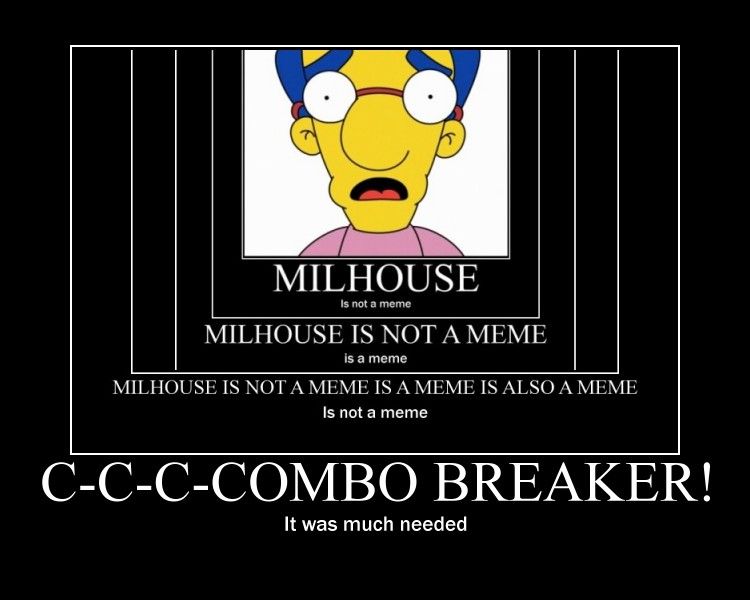
Some consider the whole idea of memes not to be academically respectable; others point out that memes are not like genes or culture is not an expression of a molecular configuration. Many, however consider memes to be a quaint and convenient metaphor. In a sense, they are a metaphor and that is all we require; but then we could say that all narratives, whether poetic or scientific, are metaphors and have some degree of structural congruence with observation. Yes, they do make for a convenient metaphor or similie that information, in certain respects, can act like a spreading evolving virus, and some people would not like to take the correspondence any further. Memes are about form, and as with ideas, structure, and formal abstractions, they are part of the “information world”. Memes exist in the same way that the idea of numbers exist (having symbolic expression as numerals), or in the same way as Christ (perhaps expressed as Jesus?), or even the meme of Santa Clause, or saying that Millhouse is not a meme is a meme. Hence, memes figure in the realms of idealism.
Memes may be a convenient way of talking about some properties of information, but this commonality stems from somewhere; it is not just a pure coincidence.
Memes and genes share properties because they are part of a superclass, one of replicating information that is more abstract than organic life or human communication. This abstract superclass is substrate independent: it is neither of molecules or words; just pure information. Genes are information mediated on DNA; memes are information mediated through symbols such as words. They share common properties because they inherit them from the abstract superclass of replicating information. It is this replication and inheritance coming from the common abstract class of information that make make act in a virus like way.
To say that ‘memes are like viruses’ is just some coincidental metphor would be to say they have semblence without any causal connection. It is no surprise in that sense to say that words like ‘genre’ (ie film) and ‘gene’ look and sound similar, because they have a common etymological origin: Latin genus. So, the meme as virus goes beyond a poetic way of talking, on the grounds that they are both members of of the same class of information.
Where does the meme reside.

Those coming from psychology have a predisposition for stuff of the mind and tend to think that memes are predominantly ideas subject to social diffusion between brains. This is a valid perspective, but is not the only possible view. The structural view sees memes as form, not only of neural connections, but of behaviour, symbols, and other substance. A meme thereby can reside in a sculpture, or a piece of cutlery, or in the process of art or manufacture, or in a library or database, or software. We might call the mental instance an internal impression, while the external instances are expressed as artifacts. Perhaps better though to consider a meme as like the genetic code and the aritfact as its phenotypical expression. In this way the meme uses behaviour and artifacts as instruments of its replication. The meme’s equivalent of DNA encoding is found in the cognitive objects in the mind, in symbolic object encoded in data respositories, and in the form of artefacts. It replicates by iterating between expression and impression.
The gene-meme disanalogy and informatic view
We can contrast genes and memes to differentiate between biological and cultural evolution. Genes are chemical, memes are of social interaction, and this has become a bone of contention among scholars who disapprove of memes.
Dawkins (1976) originally wanted to illustrate a more general property of replication for his selfish-gene thesis. To do so, he invented the idea of the meme as a second replicator. Memes and genes then are derived from a base class (to borrow object-oriented terminology), and this asbstract class is best seen through the lense of informatics. We can make our comparison of among evolutionary models of information transmissionusing using general theories like Shannon & Weaver, whereby both gene and meme can be seen as chunks of substrate independent information; they are of form, irrespective of what substrate is being formed. Herein, this informatic sense of the word meme is adopted; other senses as unit of culture, or mental parasite, are acknowledged as plausable entailments.
There have to be disanalogies, and differences, otherwise “meme” would be redundant. But where the analogies do work, then we can apply our leanings about organisms to the social world. Given the informatic overview we can envisage both as being two branches of life-science.
Real memes, internet memes
The term meme has become associated with a specific sub-type of meme: the internet meme. Such examples are LOL cats: amusing images of cats annotated with the impact font, or demotivational posters which parady too many office adornments. Internet memes like these are sent via bullitin boards or social media. As such, this electronic tittle-tatle is the equivalent to junk DNA as mostly it amuses ourselves and our social-media friends. Of course, internet memes are not the whole story of what memes are and calling them just by the term meme, conflates and trivialises the more profound meaning of meme as the evolving undercurrent of culture. Perhaps a distinction, however clumsey, would partition classes of meme into internet memes and real-world memes. Real world memes that predate the web, operating in the real world by word of mouth and other mechanisms, that have been shared since before recorded history: the wheel, harnessing fire, flint hammers and spears, and agreculture are iconic. Internet memes over social media do have some influence in the digital age, but we might term “realmemetik” (like real-politik) to denote the use of the wider meme concept and the influence in real culture, society, politics, and markets. We need to avoid trivialising and restricting our use of meme to electronic networks, in order to understand the much more pervasive influence of memes in our social history and future.
Examples of realmemetik come from anything that is not biological or physical; culture outside the internet. At the time of writing, Brexit is chock full of memes with accusations and name calling coming from all sides. Talks of trade deals seems to be going on more in bars than at the European negotiating table. We can reflect on how the Leave campain was popularised by a conflation of immigration and soverenty; or ignorance and nationalism as some in the Remain camp would have it. On the other hand brexiteers have daubbed those who want to stay in the EU as “remoaners” who can’t accept the result of a democratic referendum. The economic consequences of Britain leaving the EU will be global; the attitudinal undercurrents that drive the divisions run deep, and while the web has offered media, the real memes about Britains relationship with Europe predate the internet by decades, perhaps centuries. A sense of realmemetik tells us that we should never underestimate the central importance and impact of contagious and popular ideas that shape our society and lives.
The good the bad and the danq
That memes are independent evolving chunks of information that hijack human brains for their own replication has lead to the “thought contagion” and “virus of the mind” metaphors. Viral tropes illustrate how rogue ideas off the leash act for their own survival, and like parasites, can be detrimental to their hosts; parasitism is a property that “idea” just doesn’t convey. It might be tempting to see memes as bad things; some of them are horendous: suicide terrorism and extremist religions being extreme examples. Perhaps though, their relationship with their human hosts is more insightful, whehter they are mutially beneficial, or parasitical, or somewhat neutral. We can see that many memes expressed through culture and social behaviour do contribute to human wellbeing: healthcare, hygene, etc. These are like the intestinal fauna that help with digestion and are pro-biotic. Pathogenic memes, on the other hand, and from our DNA’s perpective, are anti-biotic (bad for the human organism). Academically for memetics, whether a meme is good or bad for us is less relevant. The key issue is their ability to survive and reproduce, their “danqness”. The term “dank” is used among some websites to denonte internet memes that become highly popular. It is overly-contrived here as danq to convey the idea of “deme-adhesion narrative quotiant”, or how widespread among a demographic a story will permiate. It is however, likely that a pro-biotic meme, in conferring survival value to its host will be more danq, but this is not a necessary correlation. For cliology and its social engineering prescriptions, understanding danqness factors, and building them into contrived memes, is a core effort.
Memetic as a STEM subject
Memetics has been dubbed as a pseudoscience, a new way of waffling about culture, and not without cause. There has been much pontification; waffle without much methodological or empirical backup. Really though, memetics, as it stands, is more of a proto-science, rather than a pseudoscience, wherein the issues and questions are still being teased out. As an emerging discipline, it has fallen into the post-modern duldrums, but this dormancy will be broken as Cultural Evolution matures and begins to clamour for the solidity and rigour of experimental work. Memetics though is not like cultural anthropology, or academic psychology, it is a current, pervasive, and influential property of living culture. Internet memes show how alive and inescabable they are, and imatative religous terrorism spectatularly illustrate their potency. Where memetics to be approached with all seriousness, then we we be able to monitor such trends, forcast their flow, and intervene. Memetics does demand a harder approach, and should eventually be considered as a STEM subject on the grounds that its implications are parallel with that of genetic engineering. In envisioning precision mass mind shaping, real-memetik does not seem so trivial. Crafting memes has been around since time in memorium: sophism, evangelism, advertising, and now social-media, are other names for meme-craft. But as agraculture, domestication, selective breading have paved the way for gene-splicing GM species, and vectorology, so will the analogue happen. Memes will be amenable to splicing and recombination in exact and precision modelled ways with computer support. Strategic communication laboratories are already targeting individuals with taylored messages, but this is set to become driven by memetic engineering.
Relation with cliology
This site is about sticking the prefix “clio” in front of other words. It is not about memes per se. There is much written about that subject elsewhere, but cliology exploits memetics as one of its core priniciples.
In an academic sense, a science of cliology is not concerned with building a story of historical events and contexts. Rather, it endevours towards a more general comprehension of the systems undercurrents. This ultimate aspiration is an instance of physics envy in that it wants to reveal the universal laws of history that apply, past, present and future. Turchin has introduced cliodynamics, a data-driven approach to mathematically modelling historical dynamics. Simerlarly, cultural evolution seeks to explain the emergence and development of human (and other) culture in similar terms to those of natural selection that have accounted for the emergence and development of life on earth. Unsurprisingly, Cliodynamics, Cultural Evolution, among others, are interrelated, with Cliology. While such subjects acknowledge memetics as a useful metaphor at best, preferring such terms as “cultural traits”, Cliology, and its corollaries of clionomy, cliography, cliotechnology and so on, seek a closer parallelism with the genetic view, and embrace the meme concept, rather self-referentially, as instrumental to building the field. Memetics does not define cliology, rather it is currently the most useful word varient in making practical tools for analysing existing cultural diversity, and generating and propagating novel cultural morphs. It releases much about what is known about hereditary and evolution, that are not available without such a concept.
Cultural traits, portraits, and substraits
Herein, the meme is considered the fundamental replicating unit of culture, giving us co-adaptive meme complexes (memeplexes), upto whole “memeomes” for “clia”. This whole constitutes a pattern of replicating information that is expressed as an identifyable species of cultural object. It is a mapping of memotypes, trait-per-trait, or a meme-portrait of a cultural species. The form is preserved between substrates of the cultural object, and the encoding medium, which is likely to be digital. Across cultural diversity, meme portaits can be enumerated, compared and arranged to represent patterns of descent.
Memes as basis for meddling with metahistory

Were universal laws of culture to be unveiled, then they would trancend time. Sure, they would provide a further iteration in reconstructing history and understanding dynamics, but they would also be applicable to future history. This is where cliology, and its use of memetics begins to part company with academia.
Genes and memes will continue to propagate into the future much as life and culture will continue evolve. Knowing the dynamics would then provide an instrument of futurology. As with all forcasting, be that meteorological or economic, it is at best an educated guess, but knowing the prevalence and properties of the memes endemic within culture gives us a slightly better insight into the candidates for survival and extinction.
However, humans are not passive recipients of culture; we have been shaping it for quite a long time. We have both influence and a vested interests in shaping our cultures, not just anticipating where it might go. Strategic forsight would invite investment. However, memetic engineering applied via cliotechnology, has mind shaping propensities, the capacity to modify opinion, shift attitudes, and exert mass-persuasion over individual preferences. Whether or not memetics is academically acceptable, the technology is coming, and will someday produce designer memes to adjust culture in very exacting ways. Memetics then, is very much intertwined with the science, art, and engineering of culture.