What are internet memes
An internet meme is a meme that is found on the world wide web.
More refined distinction on internet memes
The anarchy of the internet has its good, bad, and harmless but funny side. To some extent, it is a reflection of the collective human psyche. Apart from pornography, a large portion of our digital existence is concerned with tittle-tattle. Daft emails and texts, bulletin boards, and web sites that don’t really provide much useful information. Of course, human interaction has always been this way, and sharing nonsense seems not so much to be about the information content but about stating the individual’s presence in the world and strengthening social bonds. Memes too have existed at least since the development of language, writing and printing. Advances in electronic communication have, however, ramped up and globalised our social intercourse – which translates into the internet being the agar of meme breeding. While the cultural communication of trash is hardly new, the ease, speed, and cost of retransmission have meant that the investment of communicating informal trivia has become actually lower than its value. Moreover, enterprise has recognised this craving for on-line recognition, and the profitability of the dynamics of social-proof and has seized upon making retweets, hits and likes easy to do.
Because the internet is a fertile niche for contagious ideas, the overabundance of memes has meant that the word “meme” has become inseparable from the internet. Internet memes have lost their adjective, and are referred to simply as memes. The strength of this association and the preponderance of internet memes has meant that “internet meme” and “meme” are now synonymous. Unfortunately this equivalence means that meme, in the eyes of many, means nothing more than some silly internet meme, which has distracted from its wider and more profound meaning. Most internet memes are, content-wise, unimportant, but trivialising the whole idea takes away from the deeper essence of cultural understanding, and more to the point, practical applications such as comprehending and combatting maladaptive expressions, such as radicalisation and suicide terrorism. Working around this trivialisation is partially the motivation behind introducing the idea of cliology.
A recent BBC Documentary by Richard Clay summerises internet memes nicely.
Features of an internet meme
The three seemingly key properties of a dank (or danq) internet meme are captured by “Marmite”: sticky, spreadable, likeable (you either love it or hate it!) The archetype meme is that of the lolcat – I can has cheeseburger? This ICHC meme exhibited Marmite properties in its meteoric rise in popularity. It stuck and was easily accessible as an image macro on bulletin boards and websites; it is easy to copy and paste, or send a link to; and is super kawaii (super-cute in Japanese), an adorable kitty asking for a cheeseburger using bad grammar and spelling.
It has no real function but does have properties of Universal Darwinism that do explain its popularity: variation and selective retention. Derivations from an original meme are formed where variations are introduced, allowing the meme to preserve its relevance rather than going stale (deadpooled), and appealing to new audiences. This is often achieved by changing one of the features, such as the caption, or the background image, but retaining referential links to the original, including the format. Meme generators on the web do this, allowing users to stamp their own humour on an already popular item. Another monumental internet meme was the Harlem Shake a short dance video with an easy to replicate formula allowing certain social groups of people to stamp their own variables on a template. This saw over 12,000 videos being posted with over 44 million viewers.
Most internet memes are fairly innocuous, they are analogue to junk DNA or “useless” virus as they are neither probiotic nor dysbiotic in an efficient sense. They simply using human brains and information technology to spread themselves. They do have some minor, albeit negligible, cost to make and re-transmit, but often humour inherent in their content triviality serves as social glue across the digital domain.
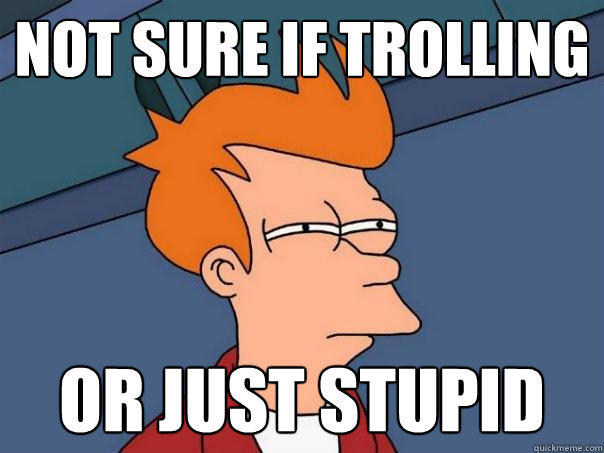
Some of the features of lol cat type memes are formulaic. These consist of an image macro as background, captioned either at the top, bottom or both, in the reverse upper-case impact font. There are a set of image macros that are re-used in a particular context, such as those of reaction images, but with some of the captions changed. For example, the Futurama Fry / Not sure if meme is a phrasal template (or snowclone) of “Not sure if X or Y”
A snowclone is a phrasal template that has one or more variables, such as the “Not sure if” meme or something like “X is the new Y”. A website on the subject suggests that “Snowclones are the new eggcorns”.
A meme rose (or compass) has been used to locate the position of a meme across two parameters of dankness and edgyness. Dankness ranges from normie to dank; edginess ranges from wholesome to edgy (see image.)
Types of internet meme

Wikipedia lists internet phenomena.
While the lol is seen as the archetype meme there are a variety of others. Animations (Badger, Badger, Badger, Nyon Cat), challenges on YouTube (Bird Box, Ice Bucket), dances (Harlem Shake, Thriller), email (mostly chain letters, scams, and viruses). Even South Park lampoons the idea of “memeing”
Copypasta, text which is copied and pasted on online forums and social networking sites, is another type of meme. This often occurs as “green text” stories, whereby the process of pasting is formatted in green to indicate that it has been copied from elsewhere.
LOLspeak and 1337 (pronounced leet for elite) are stylised ways of writing similar to texting, which deliberately avoids standard spelling, punctuation and grammar. These are popular on bulletin boards, emails, chat services, and in memes. An esoteric programming language, LOLCODE, even exist based on LOLspeak
Viral marketing is an example of applied internet memes for commercial purposes. It is an on-line version of word-of-mouth, and one of the early examples is that of Hotmail, which included a sign-up link with everything sent via Hotmail. Because of its negligible cost to reach a mass audience, viral marketing became something of a holy grayle. The difficulty for marketers was in developing advertising memes systematically. Often, their attempts would either get lucky and go viral, or flounder as forced memes.

Sites
As the web is a nest of memes, there are a number of sites devoted to the cause including much coffee break click-bait.
Know Your Meme is a part of a group of sites that offer an a commentary on contemporary and popular memes giving the origins and spread and derivatives of different forms. It also gives kind of proprietary taxonomy according to category tags.
Meme Insider is an online magazine mock of the stock exchange (NasDANQ) where memes are “traded” as if they were stocks.
TV Tropes has a similarity to Know Your Meme but is a collection of popular tropes encountered in the media. A trope (Greek for to turn) can be considered as a special type of meme, a storytelling device, that is rehashed in the portrayal of narratives.

There are a good number of meme generators on the internet allowing users to add their own captions to existing popular image macros.
The Snowclone database, as mentioned above, provides a collection of phrasal templates.
Are these just junk DNA?
Most internet memes are not really effectual, they are mostly for silliness, and if they do have a use, it is that of small talk and forming social bonds in cyberspace. Furthermore, while predominantly neutral along the probiotic-dysbiotic scale, we can see that there are some internet memes that are maladaptive, causing social problems in the real world.
One of the contemporary bugbears is that of fake news. The propagation of misinformation is nothing new. However, the ease at which a sensational news item can be shared means it is easier to relay than to fact check. This follows the principle of memetics that a meme doesn’t spread because it is good, but because it is good at spreading. Culturally, the truth of a matter is often determined by how many people believe it and this is particularly relevant in self-fulfilling prophecies.
Another example of maladaptive memes is that of dangerous fads. Challenges are often emulated on YouTube where users post their own videos of how they faired. Many of these challenges are benign, even beneficial, but others, such as the Bird Box challenge where people do everyday things blindfold can be outright dangerous, such as trying to drive a ton of metal at alarming speeds without seeing where you are going.
On the other hand, there are definitely useful memes on the web, such as instructional videos and life-hacks which propagate valuable skill sets making life easier.
We can still learn about the properties and dynamics from these examples and apply them to realmemetik. Perhaps we can use a LOLcat to save the world and sell more widgets. Stealing a format and sticking a new caption or slogan on it is easy enough, but that would have the smell of a forced meme to it. More interesting though, are the general principles that underpin the spread of content that has no particular efficient value. In part, the popularity of trash culture and nonsense internet memes comes down the point that it is trash and nonsense; not in a highbrow sense, but that these things are funny. However, the question here is not about propagating more nonsense, but of propagating a “serious” message to a target audience, whether that be by digital or word-of-mouth, or some other recursive model of information transmission. The sticky, spreadable, and likeable aspects are still evident but the analysis of internet memes gives us a deeper and transferrable picture.
- Firstly, there is an appeal to an audience, moreover, the susceptible audience for a meme tends to be quite specific whereby a meme is keyed in to be widespread among that sub-group and not another, nor the general populous. Part of the appeal of a meme to the “in” group is its dankness (or danq) whereby popularity is gained because it does not appeal to the outgroup: they just won’t get it. It acts as a kind of shibboleth and shows the senders relevance to the group’s identity. Internet memes often poke fun at a group’s unwritten foibles, which those outside are unlikely to appreciate. Templates like “old X do not die, they Y” or “Xs do it Y”, or “how many X does it take to change a lightbulb”: “old programmers don’t die, they just get REMd out” would make little sense to those unfamiliar with programming, or programmers.
- Secondly, a meme that is transmissible without any real effort has a fitness advantage. Actually, this might not always be true as a few super-niche memes rely on the difficulty of transmissibility. In general though, there is a cost-benefit analysis involved, however much the reflex of hitting share is. The tiny benefit of sending the meme is traded against the even smaller effort required. the internet knows this and facilitates likes and share options.
- Thirdly, and especially the case in niche memes among highly specific social groups, then a successful meme is likely to have some snowclone like variable along with a background constant. The lightbulb joke works because it is in a familiar format, but varies in terms of the group who are changing it; the punchline being some feature peculiar to that group: “How many software engineers does it take to change a lightbulb? None – it’s a hardware problem!”. Within the constant format, the variable (ie. social group) allows the joke to be reapplied to other social groupings thereby keeping the overall meme dank and adaptable to new situations and audiences. To some extent, these things work through the clever adaptation and require both the teller and the listener to be in the know. Furthermore, the template encourages clever variations whereupon users can stamp their own social identity by adjusting the variable. Exposure to a number of instances of the pattern makes the general template memorable (sticky) and the teller just needs then to remember the variable group and the gist of the punchline. Their retelling is excited because the listener is likely to be familiar with such a memorable format, and therefore be receptive to the novel variation.
These generalised properties are of course inherited traits in a wider sense. Those internet denizens who craft memes replicate these properties as a result of exposure to them, even if their craft does not employ an explicit systematic methodology. Deliberately exploiting the properties might seem like making a forced meme, but the sense of a meme being forced is both subjective, and usually the result of amateurish hammering of a message into an unsuitable template and hoping for the best. It is possible to engineer a meme without it coming out as forced. This is true for internet trivia as well as realmemetik, which can have a significant impact on people’s lives in the real world.