Drilldown: //Grand Framework 0.1.0
The “Grand Framework” is proposed as the overarching structure for modelling in cliology and consists of a hierarchy of sub-frameworks.
Each element of the framework will be documented in a standard format as explained in this page.
NB. Documenting the frameworks is a long project and much is still in production. The colour coding (ie not black) are just a method of glossing I use to assist me with editing.
Of partiuclar importance is the Noam framework as this offers a system of behavioural modelling at the scope of the individual.
Framework Navigation
This framework navigation section provides links to other sections of the Grand framework which is hierachial and treelike in structure. Top, Up, and Down navigate between framework levels. Top always refers to this page, while up and down are relative to the framework level documentation. As this page is the top level, then Up is empty; the next level down is that of the Cliome framework. Parent, Sybling, and Children refer to the relationships between properties within a framework and are particularly relevant to the Noam framework.
Top: Grand Framework
Up: –
Down: Cliome
Attributes
Each section has a set of attributes (meta-data) denoting such as: what type of entity a framework element is; and where it is located in the grand framework.
| Attribute | Value | Notes | |
|---|---|---|---|
| Class | GrandFramework | ||
| Name | |||
| Type | Framework | ||
| Symbol | |||
| Namespace | GrandFramework_0_1_0 | ||
| Version | 0.1.0 | ||
| Description |
|
||
| Example | |||
| Navigation | Drilldown: //Grand Framework 0.1.0/ |
Properties
Each component of a framework may have some values, a group of variables assigned to its properties. For example, a noam would have a property iota, which represents the totality of salient situational awareness. Other framework elements may have an empty set of properties. The grand framework (this page) has only one property: a collection of cliomes.
Cliomes As Collection (Of Cliome) (ie. a gallery)
Parent: –
Syblings: –
Children: –
Specific Classes
Some frameworks have components that are of special interest which are given a more detailed treatment. For example, the Meme framework is built on noams, but has two very specific ones called phi and psy. There are no specific classes of the Grand framework.
In brief
The In brief section gives an introductory but technical overview of what a framework component is about. They are elaborated in the Details section.
The GT (Grand Framework) consists of a hierarchy of abstract classes, or sub-framworks:
- Grand Framework
- Cliome,
- Meme,
- Noam,
- Fabula,
- Toulmin,
which are inherited by instantiable classes in the overall structure. The GT then, is a collection of subordinate frameworks.
This series of blogs could be thought of as an API library, as used by computer programmers. Its documentation is arranged in a similar way: as a set of nodes that form a tree. Each node follows a similar structure and this GT page will be used to provide futher explaination of the role of each section where required.
- Attributes
- Properties
- Specific Classes
- In brief
- Symbol system
- Details
- Relation of other framework elements
- Examples
- Related Issues
- Application
- Versioning and change-log
Symbol system
The GT is partly conceived as a visual calculus. The symbolism is drawn liberally and without appology from whatever gives the most meaning. Latin is used mostly for the Toulmin framework; Greek is used for identifying properties of noams and memes; Phoenician is used at the cliome level, and perculates through the other frameworks. Other symbols taken from alchemy, astrology, Chinese, electronics and so on are also hijacked. The selection of symbols is not that of arbitary labelling (as per most math), but that where the symbol itself has some inherant indication of what it refers to. For example, the Phoenecian “nun”, is the “n” in noam, but also the V) symbol has three points indicating the main properties of a noam, as well as a “hook”.
The system has some similarity to mathematical psychology, but rather than being equations, the system provides formulae. A formula is about structure, and the expressions can be thought of as blueprints for cultural constructs and their construction. They are a programming code for analysisng and synthesising cultural objects. Like alchemaic formulae, they are akin to sigils, although of course they are referring to modern scientific understanding of psychological and cultural dynamics.
The symbolism is semantically rich for its given purpose of conveying cliological expression in a consise easy to chunk way. It also facilitates symbolic manipulation (doodling on the back of a beermat) for exploring novel recombinations in symbolically encoded cultural dynamics.
Details
Navigating namespaces
The GT (Grand Framework) can be thought of in object-oriented terms. It is likely that it could be implemented as such at some point in the future. Hence each document is given a namespace according to their position in the hierarchy, and specific classes and their objects are also given by their namespace notation which resembles a file system on a computer. The frameworks can be navigated accordingly. For example, the stimulus element of a behavioural component (the sigma property of a noam) would be located as:
//Grand Framework 0.1.0/Cliome/Meme/Noam/sigma
Terminology
Terminology has been liberally adopted from various fields:
- Memetics and cultural evolution
- Biological evolution:
- Psychology, psychotherapy and behavioural science
- Epidemiology and vectorology:
- Structural chemistry: Genetics has its basis in molecular biology; it is concerned with the chemical structure of DNA and the sequences of base-pairs that are expressed as protieins and tissues. Epidemeology and biological evolution can be reduced (greedyl in Dennet’s terms) to structural chemistry. A cliome, forms an analogous structure to DNA. as it is a sequence of memes (and therefore noams) of more fundamental units. The language of structural chemisty then offers convenient, rather than strictly scientific, ways of talking about and visualising the strucure of memes. For example a single noam might be thought of “atomic” whereas a functional cluster of noams (with terminating unistability) would be more like a “molecule”. Using the symbols of the Grand Framework, assemblies of “elements” do begin to look a bit like carbon chains.
- Computer science and information systems:
- Business:
- Militery: While cliology is ethically neutral and not directed at warefare, certain elements of military terminology are convenient. Memes (and other framework components) can be co-operative and support each others survival, or they can be competetive, even combative in their “struggle” for continued existance. There are overlaps in thinking between military, epidemiology, and business theory in this sense. For example a “frontline” noam is one that engages with a presenting situation, other noams may be involved in such roles as procurement and supply (eg. of skills), or strategy, or command (eg. in directing the actions of others).
- Film studies: Narrative cinema tells a story. It is literally an adaptation of the encoding of a tale from the medium of script or book, to the medium of cinematic images; it is an example of an adapting memeplex. Film studies opens up the field to narratological examination, and offers a metaphor that helps us to understand the editing and production of movies (and their memes) such as cutting, splicing, duplication, distribution, and reception.
Relation of other framework elements
The grand framework breaks down hierarchially into the following sub-frameworks.
[diagram]
Cliomes
Owing to the misapplied terminology of memes (especially internet memes), I have introduced the specific term “cliome”. Dawkins introduced “meme” as fundamental unit, and Blackmore introduced “memeplex” (co-adaptive meme complex) as compositions of those fundamental meme units that have sustainable fitness. I often use those terms interchangeably and incorrectly. By definition a meme is atomic (ie. only one) while a memeplex is composite (ie. greater than one). A cliome represents a holon of memes (Koestler) therefore a whole and a part (greater than or equal to one) meme, and is code expressed as a clion, or cultural item. Theoretically, if not practically, a clion might exhibit a single trait. A cliome, informatically, is a structured collection of sub-cliomes, or memes. The cliome framework decomposes into memes.
Drilldown: //Grand Framework 0.1.0/Cliome
Memes
A meme is the fundamental unit in memetics. It is a single indivisible unit of replication that is express as a trait in a cultural item. As noted above, there is often terminological issues, and I will continue to use the term loosely. Where confusion is likely and a strict definition needs to be adhered to, then I will call it something like a “meme unit”. The meme framework decomposes down into two noam (8 Toulmin) elements: Phi and Psy
Drilldown: //Grand Framework 0.1.0/Cliome/Meme
Noams
A Noam is a pattern of stimulus to response, but one that acts according to some rule or belief, in support of some value. A noam also indicates a narrative object. Noam framework decomposes down into an extensive set of properties for behavioral modelling on the scope of the individual.
Drilldown: //Grand Framework 0.1.0/Cliome/Meme/Noam
Fabula
Fabula comes from the Latin for story, and is used in narratology. The framework is derived from FAB sales technique, and can be thought of a story that sells goods. Fabula framework decomposes down {features, attributes, benefits, values, and likings} which consists of two Toulmin elements product and deme that are bridged by benefits.
Drilldown: //Grand Framework 0.1.0/Cliome/Meme/Noam/Fabula
Toumin
The Toulmin framework comes from Toulmin’s model in his Uses of Argument. Toulmin framework decomposes down into elements: grounds, backing, warrant, claim, qualification, and rebuttal. Toulmin elements are propositional logic which are either accepted or deduced, and either facts or rules.
Drilldown: //Grand Framework 0.1.0/Cliome/Meme/Noam/Fabula/Toulmin
COBRA
This decision evaluation framework is an extended version of a cost-benefit analysis that admits a few additional properties. COBRA stands for: Context, Operant, Benefit, Risk, Allocation. A cost-benefit analysis would consider the allocation of resources and the benefits, but this framework also includes the situation, the range of potential resonses (operant), and the likelyhood of any particular action resulting in successfully gaining the benefits in that situation. It allows for making a better choice in a situation given the possible actions that can be taken and the resources available, and boils it down in to a single scalar value.
Examples
A set of consistant examples will be provided where relevant. These are drawn from fields of application that use argumentation and influence, preferably those that engage in mass influence at the populational level through the spread of information. These examples are intended to reflect the application areas considered so far. The relevant fragment will be provided for each of the framework elements (eg. noam.iota as applied to MLM sales). Such are treated as references to the elements that can be accessed as needed, rahter than as a complete document, hence there will be some repitition. The parts of the examples though will be built into a whole (at some point) giving a full examination, in terms of all the cliiological frameworks, for each application area.
- law, from the defendent or prosecution or judicial perspectives mostly relevant to Toulmin argumentation
- science, methodology
Sales (direct)
Direct sales usually refers to party plan and so on, rather than sales done in store, or involving the ‘travelling saleman problem’. The examples used in the frameworks concern face-to-face selling of products, as done in direct sales, but also can be applied to in store and other methods of selling.
GTech Chordless Lawnmower on the basis that their advert illustrates the principles of FAB selling. (I disclose that I have no connection with GTech, nor have a lawn.)
Sales (MLM)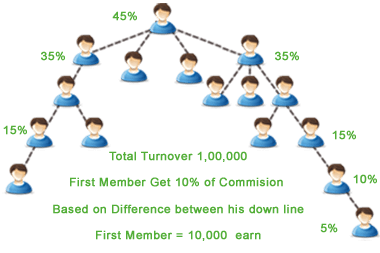
Multi-level marketing is a means of selling product; that face-to-face selling aspect is built on the direct sales example where distributers sell products to customers. There are many of these companies, but Amway provides a fine example (I disclose that I have been a former distributer with Amway and respect their products and methods). MLM can be contrasted against illegal Ponzi and pyramid scams. The MLM aspect extends direct selling further to consider the way such schemes are “member get member”. That is, existing distributers can sponsor new distributers and introdue them to the compensation plan. The plan is recursive, meaning the new distributer is also encouraged to spot and recruit distributers, thereby forming a downline. A distributer earns commission from their own direct sales, but as the commission structure is recursive, they also earn fraction from their downline team as reward for developing the distribution network and obvetaing the need for media advertising. A redidual income can be built up. This is what makes it multi-level as opposed to being awarded a referral fee for signing up a friend. Referral can work recursively, but does not have a recursive compensation plan for remunerating the upline. MLM then, is an example of memes in action applied to marketing, whereby the idea of a distribution network spreads among a population. While MLM is often billed as the opportunity to develop a lifestyle chaning income, or derised as as a dodgy pyramid, it will be examined here from the ethically agnosic stance of its dynamics and how cliology can be applied to practical marketing and the “viral” spread of ideas.
- PR & advertising
- military,
- psychotherapy
- organisational development
Other standard “case studies” are used to examplify specific qualities of the frameworks
Thermostat
Thermostats are classical examples in sytems and cybernetics theory as they represent a simple method of controlling temperature based on feedback. The frameworks are very much based on systems theory and exhibit many of the features. The thermostat and other simple systems will be employed to help explain the properties of framework components.
- environmentalism

The cat sat on the mat
This is something of a Schrodingeresque thought experiment, or at least a Mickey Mouse case study. It represents an idealised, easily generalisable, visualisable and memorable instance where the properties of a phenomena can be contemplated. Such examples offers a tangible vehicle without too many confounding variables. That “the cat sat on the mat” doesn’t often, but might raise the philosophical questions of: ‘why did the cat sit on the mat?’ ‘What is the function of the behaviour?’ and so on. The cat’s comforts, stimuli, decision making, behaviour and learning obviously go unspoken, but asking why a cat would elect this simple activity allows for a clean way of understanding the frameworks. Cats are social creatures; as to their capacity for imitation and cultural evolution, it remains to be seen. The meme framework, of idea transmission, may not be relevant, but the noam framework (of ideas that don’t necessarily transmit) is applicable. Non-human animals were the backbone of behaviourism; the framework can be seen as complementary to the models of behavioural theory. Hence, contemplating animal activity, before introducing the complexities that humans exhibit, can be seen as a contribution to theory building. For instance, in thinking about the noam model we could think about the cat’s totality of relevant situational awareness (sigma), her values (nu), potential response (rho) along with other properties of that framework. ‘”The cat sat on the mat” then offers a cannonical thiniking instrument. Of course this is not particularly about cats, or any other animal, but rather a prompt to the kinds of systems that can be wondered about. It just so happens that a local cat, I call Softmint, provides a reminder for much meditation on memetics; as all LOL cats do.
Application
Related Issues
Versioning and change-log
Configuration management and version control is essential where the symbolism and nomenclature of the frameworks are ever evolving. This allows for major, minor, and patch updates to be tracked and integrated into the whole. SemVer has been adopted as a standard. The origin and history of each element is given in brief in order to give some insight into the underlying thinking. Developmental changes are noted, as per the version number, along with an account of the current verion.
Origin and history
Right, I think I know how to hammer these jigsaw pieces into some kind of picture. I’ve been drip feeding blogs on various models as I have happened to write them. I’ve tried consolidating groups of ideas, such as Toulmin, noams, COBRA, fabula and so on, but the number of combinations rapidly became unwieldy.
My original thought years ago was about Recombinant Meme Engineering (RME), although now that seems to be just one component of a bigger program of cliology. Let’s start again. Let us suppose that it could all be stuffed into one coherent model: a “grand framework” whereby each model, or subframe, is an element, and each element decomposes into further elements. I’m using “element” to comply with the idea of XML because ultimately this stuff should be encodable.
I’m calling it the “grand framework” for now as I can’t think of any fitting clionym, nor any cheesy acronym. I’m sure they will come to me.
Anyway, the whole thing suggests a hierarchy of components: a tree. I wanted things to be version numbered, like the dependencies of a git repository and the time to start numbering is now using SemVar.
Furthermore, this grand idea gives a systematic order to blogging and terminology. My thoughts at present are that each framework element, the fancy new word for model, could be split into headings or blogs like:
- Framwork navigation
- Attributes
- In brief
- Symbolism
- origin and history
- Version
- elements within the specified framework level
- objects within the specified framework level
- specific classes within a framework
- application with examples
Eventually, this could give structured documentation. I might even go so far as to give namespaces and xpath strings. Surely I’ll post in the future that ‘it seemed like a good idea at the time’. This does, of course, mean that I will have to go back over all the blogs and number them. A change log would be ideal, but that isn’t happening anytime soon.
Current version
GrandFramework 0.1.0
The current versoin of the Grand Framework appears as a series of blogs principally because it is a rather large effort that will be in development for some time and therefore needs the looseness of structure. I am building the sections up using a structure between that of a Wikipedia page and an API document. The sub-framework sections appear either as one page, or devided into dedicated blog posts as is convenient.
In the current version of the documentation, which is pre-release 0.1.0 and likely to change significantly before reaching the site’s mainspace, parts of the framework are given a namespace at the top of the post marked as drilldown.
