As a truly tenuous example of nominative determinism, and an idle play on words, I burped out the idea of Gray areas. Reflected binary code, or Gray code (after the electronics engineer, Frank Gray) is applied as a method of digital error correction. It resembles a binary string of 0s and 1s, but consecutive strings have a hamming distance of 1 (hamming distance is the metric I adopted in comparing cliomes).
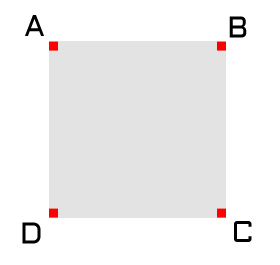
Two by two matrices are common in analysis and endemic to management consultants: the Boston matrix is famed amongst marketeers. Such devices feature 2 axes with values such as high-low, or present-absent, and graphically depict the relationship, or classification, of a pair of parameters such as market share and market growth as four quadrants. In essence it is a grid of boolean X boolean. Consultants will layout their powerpoint however most persuasive and endow the quadrants with snappy titles; mathematicians would simply call the quadrants ABCD, either clockwise or anticlockwise. Pedantic computer scientist like to see things in their binary order, and the axes labelled in a particular format. A small thing, but it could start wars and cause software to crash. The idea of the Gray area resolves this triviality.
A “Gray area” then is a sequential enumeration of the quadrants according to the binary values of the axes. Numbering them 0 to 3 has a practical convenience. There is a single difference between two horizontal (or vertical) boxes, but for either of the diagonals, there are two differences. Using the Gray area numbering schema. By an astounding feat of mathematical wizardry, we can calculate the differences between quadrants using the hamming distance on their binary representations. So the difference between quadrant A (Gray area 0) and quadrant D (Gray area 3) would be a hamming distance of 2 as their binary strings are (00) and (11) respectively. This may seem like a small thing, but consider that a cliome is a boolean hypercube, then the enumeration is that of the hyper-corners. The Gray area then indicates the corner a cliome sits in, and the distance between hyper-corners, ie the distance between cliomes, is provided by the hamming distance between their numerical designations. We might also consider the number as a colour coding (greyscale) between 0, which computers represent as black and, for 8 bit, 255 – hence Gray areas would be grey areas.
|
1 |
10 |
11 |
|
0 |
00 |
01 |
|
0 |
1 |
In application, it is likely that cultural evolution arises through step changes as cladogenesis. In other words, change occurs on a small number of traits and so the novel form is likely to be similar to its ancestor. At a cliomic level, that of the underlying memetic code, then the variant is likely to be close to the predecessor. The smallest distance between any two cliomes is of a hamming distance of 1: the change of a single trait. For culture to drift in this way, then there would be a series of changes of single traits which would indeed constitute a Gray code sequence,and can be depicted as a Hass diagram. Closeness has implications for changing cultural practice as, between the present, possibly maladaptive cultue, and the utopian ideal, may require knowing the stepping stones.
Incidentally, the Levenshtein distance between “Grey” and “Gray” is 2.
Leave a Reply